In 2013, a British television series aired on Channel 4 that felt less like a broadcast and more like a fever dream. It began with a fluorescent yellow sports bag and a question that would haunt the internet for a decade: "Where is Jessica Hyde?" Long before the world grappled with the surreal anxieties of the 2020s, Utopia arrived as a neon-drenched, hyper-violent, and terrifyingly prescient masterpiece. It wasn't just another thriller; it was a sensory assault that redefined the genre. Today, despite a high-profile but ultimately hollow American remake, the original British Utopia remains the definitive conspiracy thriller of the 2010s—a cult phenomenon that predicted our modern world with uncomfortable accuracy.
The Visual and Auditory 'Fever Dream'
Most dystopian thrillers lean into a "gritty" aesthetic defined by washed-out grays, muddy browns, and perpetual rain. Utopia did the opposite. Director Marc Munden and cinematographer Ole Bratt Birkeland opted for a 2.35:1 cinemascope aspect ratio and a color palette so saturated it felt radioactive. We are talking about primary colors turned up to eleven—electric yellows, deep cyans, and blood-reds that make every frame look like a pop-art comic book come to life.
This aesthetic choice wasn't just for style; it created a sense of "heightened reality." The world of Utopia looks beautiful, yet it feels fundamentally wrong. This visual bravado is matched only by the score from Cristobal Tapia de Veer. Utilizing "found sounds"—including human bones, bird calls, and rhythmic breathing—the soundtrack is twitchy, tribal, and deeply unsettling. It’s the sound of a panic attack set to a beat.
It is this uncompromising artistic vision that led the series to maintain a flawless 100% critics' rating on Rotten Tomatoes, with audience scores consistently exceeding 90%. Critics didn't just review it; they experienced it.
The Plot: The Utopia Experiments
At the heart of the series is a legendary graphic novel titled The Utopia Experiments. Rumored to have been written by a maniacal scientist in a psychiatric ward, the manuscript supposedly contains hidden secrets predicting the worst disasters of the last century.
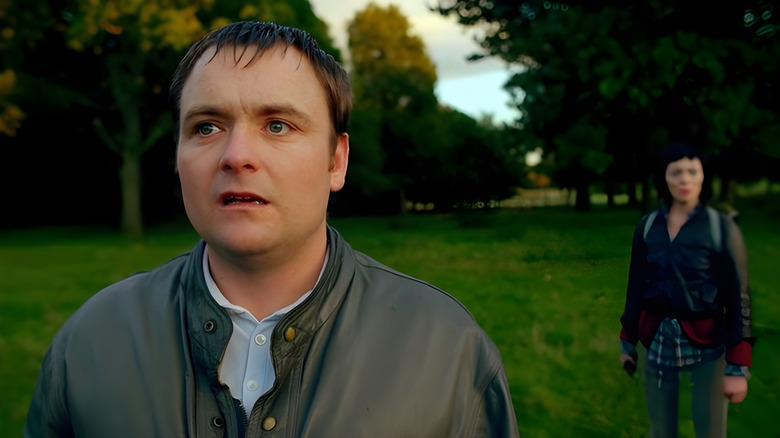
The story follows a disparate group of comic book fans—Ian, Becky, Wilson Wilson, and the young Grant—who meet online and come into possession of the original unreleased manuscript. Their lives are instantly dismantled as they are hunted by The Network, a shadowy organization with tendrils in every government and pharmaceutical board.
What makes the narrative truly gripping are the characters:
- Wilson Wilson: A survivalist and tech-paranoid genius whose theories prove to be horrifyingly correct.
- Jessica Hyde: The fugitive daughter of the manuscript's author, a woman raised in the shadows who views morality as a luxury she cannot afford.
- Arby: Perhaps the most terrifying "enforcer" in TV history. With his heavy breathing and detached, childlike demeanor, he is a product of The Network’s brutal experiments.
Conspiracy Realism vs. Modern Anxiety
While many thrillers rely on "aliens" or "shadowy lizard people," Utopia (2013) pioneered what fans call conspiracy realism. Its horror doesn't come from the supernatural, but from the terrifyingly logical. The Network’s ultimate goal isn't world domination in the traditional sense; it is a cold, calculated response to overpopulation and resource depletion.
The show’s core "conspiracy" is a four-step plan that feels eerily familiar to anyone who lived through the early 2020s:
- Step 1: Outbreak – The engineering of a global health crisis (the "Russian Flu").
- Step 2: Narrative – Creating mass hysteria through media manipulation to ensure public desperation.
- Step 3: Vaccine – Rolling out a mandatory global vaccine to "solve" the crisis.
- Step 4: Sterilization – The "Janus" protein within the vaccine is designed to sterilize the vast majority of the human race, ensuring a managed population decline.
The show masterfully blended this fiction with real-world history, using actual news footage from the 1970s and 80s to suggest that The Network has been pulling the strings of history for decades. It tapped into our deepest anxieties about Big Pharma, government surveillance, and the ethics of "the greater good."
The Original vs. The Remake: Why British is Best
In 2020, Amazon released an American remake of Utopia, helmed by Gillian Flynn. While it had a bigger budget and recognizable stars like John Cusack, it failed to capture the lightning-in-a-bottle magic of the British original. The comparison is a masterclass in why "bigger" isn't always "better."
| Feature | UK Original (2013) | US Remake (2020) |
|---|---|---|
| Episodes | 12 (Two Seasons) | 8 (One Season) |
| Rotten Tomatoes | 100% | 51% |
| Cinematography | Saturated, Surreal, Graphic | Glossy, Generic, Tech-firm style |
| Tone | Gritty, Nihilistic, British Dark Humor | Action-oriented, Standard Thriller |
| Wilson Wilson | Played with tragic depth by Adeel Akhtar | A more conventional "nerd" archetype |
The American version traded the "idiosyncratically broken Britain" for a glossy tech-firm milieu. It lost the raw, visceral edge that made the original so dangerous. Furthermore, the 2020 release was a victim of terrible timing—launching a show about a manufactured pandemic during an actual global pandemic was a bridge too far for many viewers. The original, however, remains timeless because its style is so uniquely detached from any specific era.
The Cult Legacy: A Life Cut Short
Perhaps the most "conspiratorial" thing about Utopia is its cancellation. Despite its critical acclaim, Channel 4 cancelled the show after just two seasons (12 episodes total). The reasons cited were low ratings, but for the show’s "cult" following, the cancellation only fueled its legend. It became a "fugitive" piece of media—something so close to the truth that it "had" to be silenced.
In the years since, Utopia has experienced a "long-tail" engagement. Its influence can be seen in the visual language of modern hits like Mr. Robot and Severance. If it were released today on a platform like Apple TV+ or A24, it would likely be a global phenomenon on the scale of Squid Game.
"Utopia doesn't just ask 'what if' the conspiracies were real; it asks 'what if' the people behind them were the most rational people in the room." — A sentiment echoed across fan forums for over a decade.
FAQ
Q: Where can I watch the original Utopia (2013)? A: Depending on your region, the original British series is often available on Amazon Prime Video or through specialized British content streamers like BritBox. It is essential to ensure you are watching the Channel 4 version, not the 2020 Amazon Original.
Q: Is the show too violent? A: Utopia is famously graphic. It uses violence to emphasize the cold, clinical nature of its villains. If you are sensitive to intense scenes involving torture or stylized gore, proceed with caution. However, the violence is never purposeless—it serves the show's theme of the "expendability" of the individual.
Q: Does the second season have a satisfying ending? A: While the show was cancelled before a third season could be made, the ending of Season 2 is hauntingly poetic. It provides enough closure to be satisfying while leaving the door open for the "conspiracy" to continue in the viewer's imagination.
If you are looking for a thriller that will stick to your ribs long after the credits roll, look no further. Utopia is a masterwork of television that challenges your perceptions and dizzies your senses.