It is only March 2026, yet the tech landscape is already shifting beneath our feet. Apple has just executed one of the most aggressive product "purges" in its history. This isn't just a standard seasonal refresh; it’s a fundamental pivot toward more accessible entry prices and a relentless push for M5-tier performance across the board.
For those tracking the Apple product roadmap 2026, the message is clear: the hardware lifecycle is compressing. If you were holding out for an older model or wondering why your local Best Buy just cleared its shelves, here is the breakdown of the major shifts.
Quick Facts: Discontinued vs. Successors (March 2026)
| Discontinued Product | Official Successor | Key Upgrade |
|---|---|---|
| AirTag (1st Gen) | AirTag 2 | 1.5x Range, Louder Speaker |
| iPhone 16e | iPhone 17e | MagSafe, C1X 5G Modem, Ceramic Shield 2 |
| MacBook Air M4 | MacBook Neo / M5 Air | $599 Entry Price (Neo), Fusion Architecture (M5) |
| MacBook Pro (M4 Pro/Max) | MacBook Pro M5 Pro/Max | Neural Accelerators, 40-core GPU options |
| iPad Air M3 | iPad Air M4 | N1 Connectivity Chip, 12-month cycle update |
| Studio Display (2022) | Studio Display (2026) | ProMotion (120Hz), Nano-texture standard |
| Pro Display XDR (2019) | Studio Display XDR | 27-inch HDR Panel, 15% lower entry price |
The Great 2026 Product Purge: Why Apple is Moving Fast
The primary driver behind this mass discontinuation is the transition to the M5 chip family and a strategic overhaul of the entry-level Mac market. In previous years, Apple might have kept older silicon on the shelves for 24 to 36 months. However, the introduction of the MacBook Neo—a $599 "budget" powerhouse—has forced Apple to retire the M4 MacBook Air and the 2022 Studio Display much earlier than expected.
Which Apple products were discontinued in March 2026? Apple officially retired seven products: the 1st Gen AirTag, iPhone 16e, MacBook Air M4, M4 Pro/Max MacBook Pro, iPad Air M3, 2022 Studio Display, and the 2019 Pro Display XDR. This shift represents a 15-20% more accessible entry price for professional-grade ecosystem components, as Apple prioritizes user volume over high individual margins for its entry-level gear.
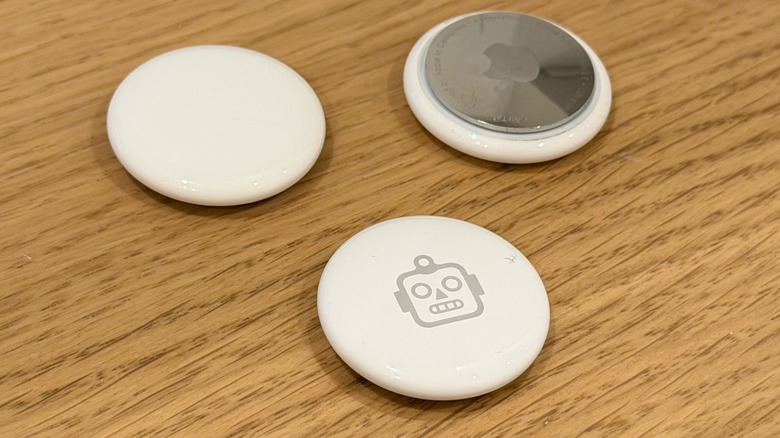
1. First-Generation AirTag (2021–2026)
After five years of dominance in the tracking market, the original AirTag has finally been retired. While the 2021 model was a revolutionary device for the "Find My" network, its limitations became apparent as competitors began integrating higher-precision chips and louder alerts.
Is the first-generation AirTag still available? No, Apple discontinued the original AirTag in early 2026 in favor of the AirTag 2. The new model offers a 1.5x expanded range thanks to a second-generation ultra-wideband chip. This means you can track your keys from the other side of a crowded airport terminal rather than just the next room. Furthermore, the AirTag 2 features a redesigned internal speaker that is significantly more audible through thick upholstery or luggage.
Despite these upgrades, Apple has kept the price point steady. You can still expect to pay $29 for a single unit or $99 for a 4-pack, making the transition to the new hardware relatively painless for the average consumer.
2. iPhone 16e: The Short-Lived SE Successor
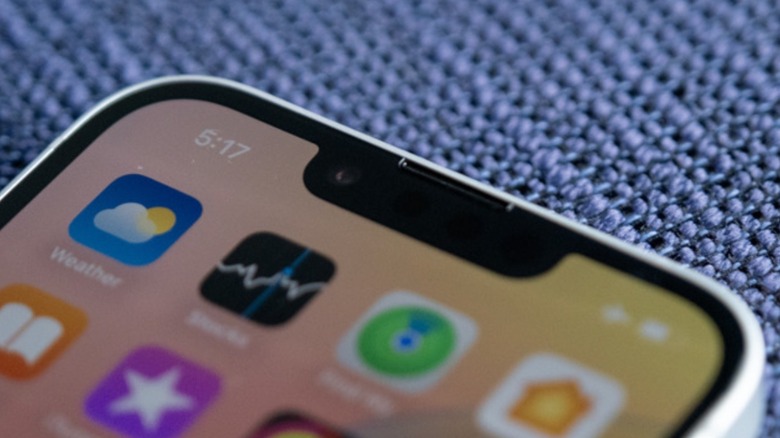
The iPhone 16e will likely go down in history as one of Apple's most controversial "budget" experiments. Launched to bridge the gap between the aging SE and the flagship line, it struggled to find a foothold due to several technical compromises, including the use of a lower-binned A18 chip and the retention of the traditional "notch" design at a time when the Dynamic Island had become the standard.
What replaced the iPhone 16e? The iPhone 16e was replaced by the iPhone 17e, which introduces MagSafe support, Ceramic Shield 2, and the C1X 5G modem. The 17e addresses the 16e's biggest flaws by finally including full MagSafe integration—meaning budget users no longer have to miss out on the ecosystem of magnetic chargers and wallets.
The move from the binned A18 to the binned A19 in the 17e provides a 15% boost in efficiency, but the real star is the C1X 5G modem, which offers significantly better signal retention in low-coverage areas.
3. M4 MacBook Air and MacBook Pro (M4 Pro/Max)
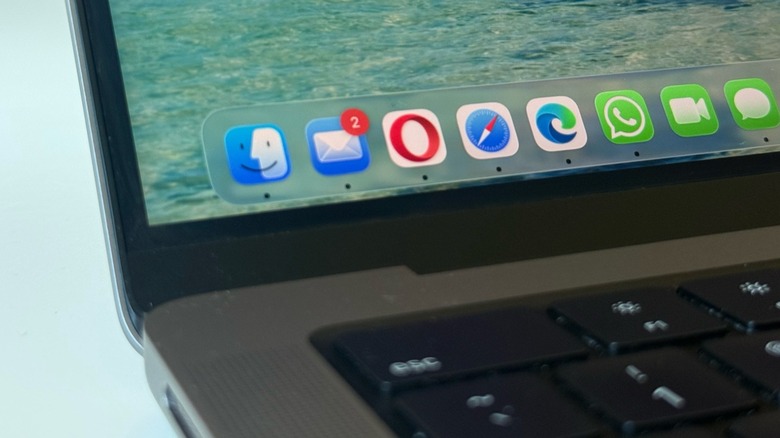
The retirement of the M4 MacBook lineup signals the arrival of the "M5 Era." While the M4 was an incredible performer, the M5 series introduces "Fusion Architecture," a new way for the GPU to scale that drastically improves 3D rendering and AI processing.
The MacBook Pro M5 release news has overshadowed the outgoing M4 Pro and M4 Max models, which were previously the gold standard for mobile workstations. But the biggest shock to the system is the MacBook Neo.
MacBook Neo: The New Entry Level
The MacBook Neo is Apple's answer to the $599-to-$799 laptop market. By discontinuing the M4 MacBook Air, Apple has cleared a path for this new device.
| Feature | MacBook Neo | MacBook Air (M5) |
|---|---|---|
| Starting Price | $599 | $999 |
| Chipset | M4 (Standard) | M5 |
| Display | 13" Liquid Retina | 13" / 15" Liquid Retina |
| Weight | 2.8 lbs | 2.7 lbs |
| Best For | Students / General Use | Professionals / Creatives |
The Neo utilizes the standard M4 chip (recycled from the previous flagship Air) but wraps it in a slightly more robust chassis to hit that aggressive $599 price point. It’s a "pro-sumer" strategy that makes the Apple ecosystem far more accessible than it was even two years ago.
4. iPad Air M3: A 12-Month Lifecycle
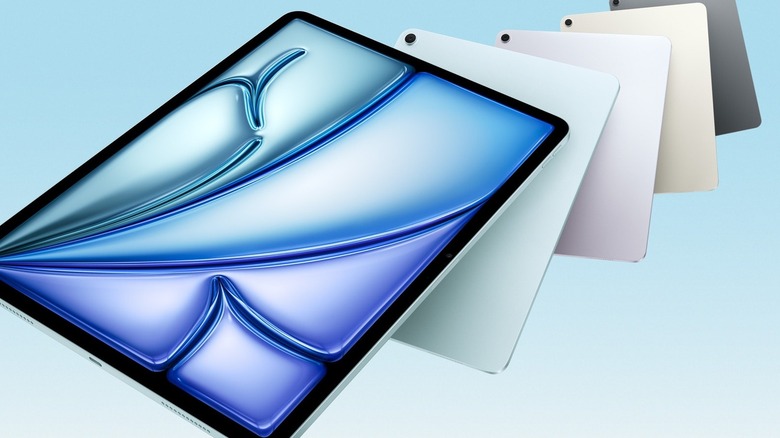
Perhaps the most surprising casualty of the 2026 refresh is the iPad Air M3. In a move that highlights Apple’s "Product Lifecycle Compression," the M3 Air was retired just 12 months after its launch. This marks one of the fastest replacement cycles in the history of the iPad Air lineup.
The successor, the iPad Air M4, isn't just a spec bump. It incorporates the N1 connectivity chip and the C1X modem, which specifically improves AirDrop speeds and "Find My" accuracy. For users who rely on the iPad as a primary mobile workstation, the N1 chip allows for nearly instantaneous file transfers between devices—a bottleneck that had plagued the M3 model.
"The rapid retirement of the M3 Air suggests that Apple is no longer content with incremental updates. They are syncing their tablet and Mac silicon cycles more tightly than ever before to ensure AI features remain consistent across the ecosystem." — Tech Analysis Quarterly, 2026
5. Professional Displays: Studio Display (2022) & Pro Display XDR (2019)
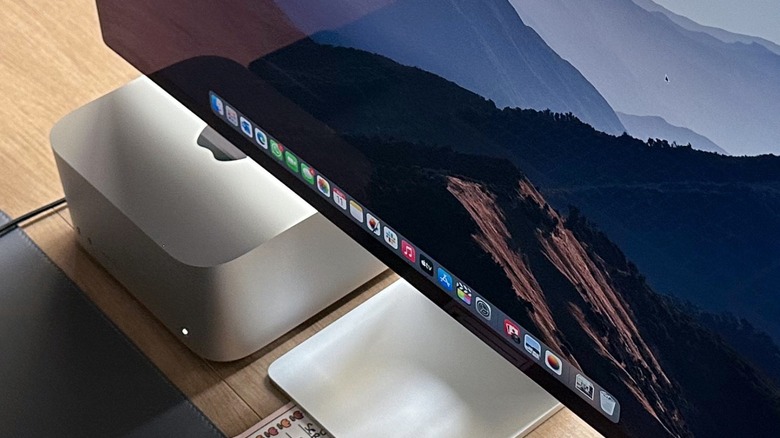
Apple has finally consolidated its monitor lineup, ending the long runs of the 2022 Studio Display and the legendary (but aging) 2019 Pro Display XDR. The 2019 XDR, while a masterpiece of its time, lacked the ProMotion (120Hz) and high-efficiency backlighting found in modern MacBook Pro screens.
The new lineup is now split into the Studio Display (2026) and the Studio Display XDR.
- The Studio Display (2026) now includes ProMotion and a nano-texture glass option as a more affordable add-on.
- The Studio Display XDR replaces the 2019 model with a 27-inch HDR panel that actually costs about 15% less than the original 32-inch 2019 version, despite having better color accuracy and 120Hz refresh rates.
This consolidation simplifies the professional workflow. Instead of choosing between a "pro" monitor and a "consumer" monitor, users now choose based on their need for XDR (Extreme Dynamic Range) performance.
Buying Guide: Should You Buy Discontinued Stock?
Whenever Apple "cleans house," third-party retailers like Amazon, B&H Photo, and Adorama immediately begin slashing prices on "Old New Stock." But is it worth it?
The Case for the Discontinued M4 Pro: With the M5 Pro hitting the shelves at full price, a discounted M4 Pro MacBook Pro is currently the best value in tech. You can often find these for $300-$500 off the original MSRP. For 90% of users, the performance difference between M4 and M5 will be negligible in daily tasks like video editing or coding.
The "MacBook Neo" vs. Used Market: The $599 MacBook Neo is a game-changer. However, if you look at the second-hand market, a 2021 M1 Pro 16" MacBook Pro can now be found for roughly $600.
- Choose the Neo if you want a brand-new battery, a full warranty, and the latest ultra-portable design.
- Choose the M1 Pro (Used) if you need the extra ports (HDMI, SD Card) and the larger 16-inch screen for creative work.
Verdict: If you are looking for an AirTag or an iPad Air, wait for the new models. The range improvements on the AirTag 2 and the connectivity upgrades on the M4 iPad Air are worth the extra investment. For MacBooks, the M4 clearance sales are the "sweet spot" for value-conscious buyers.
FAQ
Q: Will Apple still support the 1st Gen AirTag with software updates? A: Yes. While the hardware is discontinued, the "Find My" network is backward compatible. Your original AirTags will continue to work for the foreseeable future, though they won't benefit from the extended range of the new chipsets.
Q: Is the MacBook Neo replacing the MacBook Air? A: Not exactly. The MacBook Neo serves as a new entry-level tier. The MacBook Air (now with M5) remains the "premium thin-and-light" option, while the Neo occupies the price bracket formerly held by the aging M2 and M3 models.
Q: Why was the iPad Air M3 discontinued so quickly? A: Apple's strategy shifted to unify the "Neural Accelerator" capabilities across all devices. The M3 lacked some of the specific hardware optimizations for the 2026 version of iPadOS, prompting a faster transition to the M4.
Are you planning to upgrade to the M5 series, or are you hunting for a deal on the discontinued M4 stock? Let us know your strategy in the comments below.