In 1995, Newsweek published an infamous article titled "The Internet? Bah!" claiming that no online database would replace the daily newspaper and that no one would ever buy things over the web. We laugh now, but that’s the thing about technology: the line between a revolutionary breakthrough and a total embarrassment is razor-thin. Sometimes, we get it wrong in the opposite direction. We see a shiny new gadget and convince ourselves it will change the way we live, work, and breathe, only to find it gathering dust in a drawer three years later. These are the ghosts of our tech past—the ambitious, the overhyped, and the occasionally absurd "future" that never quite arrived.

1. 3D TVs: The Goggles That Nobody Wanted
If you visited a Best Buy between 2010 and 2012, you were likely handed a pair of plastic glasses and told that the future of home entertainment was jumping out of the screen. Riding the massive wave of James Cameron’s Avatar, every major manufacturer—Sony, LG, Panasonic—bet the farm on 3D. It was supposed to be the most significant jump since the transition from black-and-white to color. Instead, it became one of the fastest-crashing tech fads in history.
Why did 3D TVs fail for home use? The failure wasn't due to the technology itself, but the friction it introduced. 3D TVs failed primarily due to the inconvenience of wearing bulky, often expensive glasses, a lack of high-quality native 3D content, and poor viewing angles compared to traditional cinema experiences. In a living room setting, people want to multitask—look at their phones, eat snacks, or lounge on the side of the couch. 3D required you to sit perfectly still, centered, and wearing shades in a dark room. It turned "movie night" into a logistical chore.
The Industry Impact: Consumer interest in 3D home entertainment dropped by over 70% within five years of its peak. This lack of demand was so absolute that major manufacturers like LG and Sony officially ceased production of all 3D-capable sets by 2017.
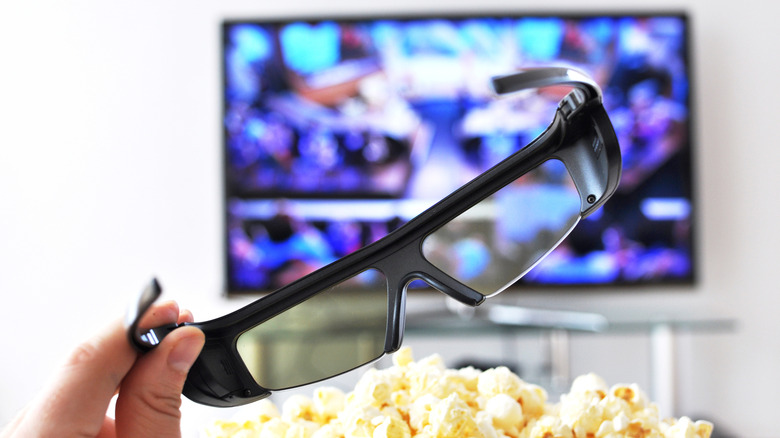
Legacy: While the living room 3D dream died, the technology found its true home in VR headsets like the Meta Quest and Apple Vision Pro. The lesson? If you’re going to force people to wear something on their face, the experience better be fully immersive, not just a gimmick on a flat screen.
2. Google Glass: The Birth of the 'Glasshole'
Long before "Metaverse" was a buzzword, Google tried to put the internet directly onto our eyeballs. Launched with a skydiving stunt in 2012, Google Glass was the ultimate status symbol for Silicon Valley. It promised a world where directions, texts, and photos lived in a transparent HUD over your right eye. It was futuristic, ambitious, and—socially speaking—a total disaster.
What was the main reason for Google Glass's failure? Google Glass struggled due to significant privacy concerns regarding its discreet camera, a high price point ($1,500), and a lack of a clear 'killer app' or daily use case for general consumers. The public reaction was visceral; people didn't like being recorded without their knowledge, leading to the derogatory term "Glasshole" and the device being banned in bars, movie theaters, and casinos.
Why It Failed:
- Social Friction: The "always-on" camera made people around the wearer feel uncomfortable and surveilled.
- Design: It looked like a prop from a low-budget sci-fi movie, failing the "would I wear this on a date?" test.
- Battery and Heat: The device would get noticeably hot and the battery rarely lasted a full day of active use.
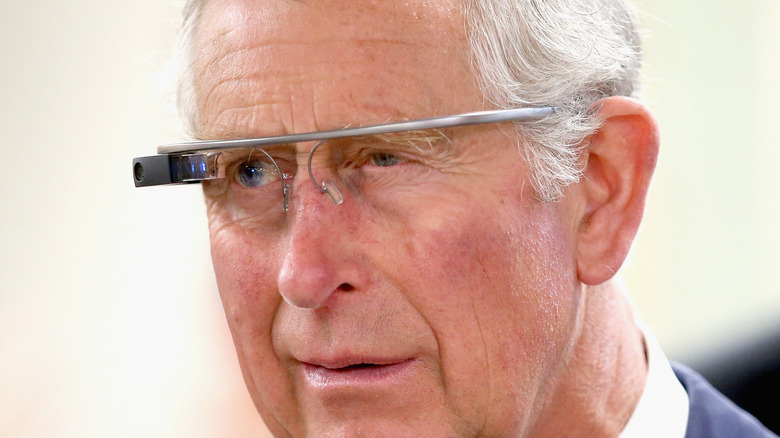
Silver Lining: Google Glass didn't actually die; it just went to work. The "Enterprise Edition" became a hit for surgeons who need hands-free data during operations and factory mechanics who need schematics overlaid on the machinery they are fixing.
3. Modular Phones (Project Ara): The LEGO Dream
For a few years, the tech world was obsessed with the idea of the "last phone you’ll ever buy." Google’s Project Ara (and competitors like Phonebloks) envisioned a smartphone made of interchangeable modules. If your camera was outdated, you’d pop out the old one and click in a 20-megapixel sensor. If your battery was dying, you’d swap it for a fresh block. It was meant to be the end of planned obsolescence.
Did modular phones successfully reduce e-waste? While modular phones like Project Ara aimed to reduce e-waste by allowing part upgrades, they failed to reach the mainstream due to technical bulkiness and the market's preference for slim, integrated designs. The engineering challenge was immense; holding all those modules together required "electropermanent magnets" and frames that added significant weight and thickness.
The Reality Check:
| Feature | Modular Phone (Project Ara) | Standard Smartphone (iPhone/Galaxy) |
|---|---|---|
| Durability | High risk of modules popping off during drops | Sealed, water-resistant chassis |
| Thickness | Bulky due to internal frames | Slim, pocket-friendly |
| Performance | Slower data transfer between modules | Optimized, integrated circuitry |
| Consumer Appeal | Tech enthusiasts and "DIY"ers | General public wanting "it just works" |
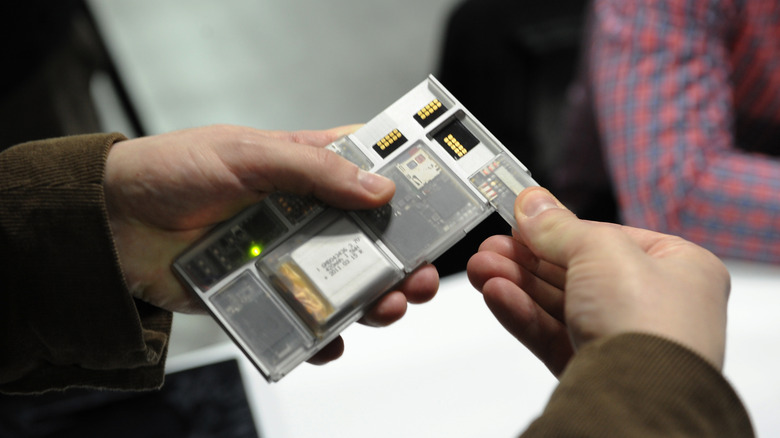
Legacy: The dream of repairability lives on through companies like Framework (for laptops) and Fairphone. While we may never have a "LEGO" phone, the right-to-repair movement has forced giants like Apple and Samsung to make parts more accessible.
4. The Segway: The $5,000 Pedestrian Nightmare
Before it was revealed in 2001, the Segway (code-named "Ginger") was hyped as more important than the PC or the Internet. Renowned inventor Dean Kamen promised it would revolutionize urban planning and make cars obsolete. Investors like Jeff Bezos were enamored. But when the curtain finally pulled back, the world saw... a $5,000 motorized scooter that made the rider look slightly ridiculous.
The Segway failed to change the world because it fell into a regulatory no-man's-land. It was too fast for sidewalks and too slow for roads. Instead of becoming the "car killer," it became the preferred vehicle for mall security guards and guided city tours for tourists.
The $20 Billion Pivot: While the Segway failed as a primary transport device, its self-balancing patent portfolio paved the way for a $20 billion global micromobility market. The gyroscopic tech inside that "failed" machine is exactly what allows today's e-scooters and hoverboards to stay upright.
5. Curved TVs: The Immersive Trap
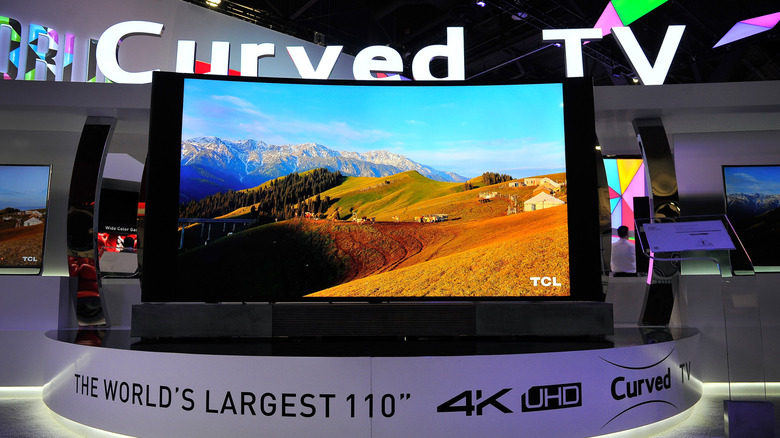
Shortly after 3D TVs exited stage left, manufacturers tried a new angle—literally. Curved TVs were marketed as "more immersive," mimicking the slightly curved screens of high-end IMAX theaters. The marketing suggested it would wrap the image around your field of vision, making you feel like you were in the movie.
The problem was simple physics. To get the benefit of the curve, you had to sit in one exact "sweet spot" directly in front of the screen. If you were sitting on the end of the couch during a family movie night, the curve actually distorted the image and created annoying reflections from room lights.
Why It Failed:
- The Reflection Problem: The curve acted like a magnifying glass for any lamp or window in the room.
- Wall Mounting: A curved TV looks awkward and bulky when mounted against a flat wall.
- Price Premium: Consumers were asked to pay 20-30% more for a feature that often made the viewing experience worse.
Legacy: Curvature found its niche in Ultrawide Gaming Monitors. Because a PC gamer sits close to the screen and is always in the center, the curve actually works to reduce eye strain and increase immersion.
6. Netbooks: The Weak Laptops the iPhone Killed
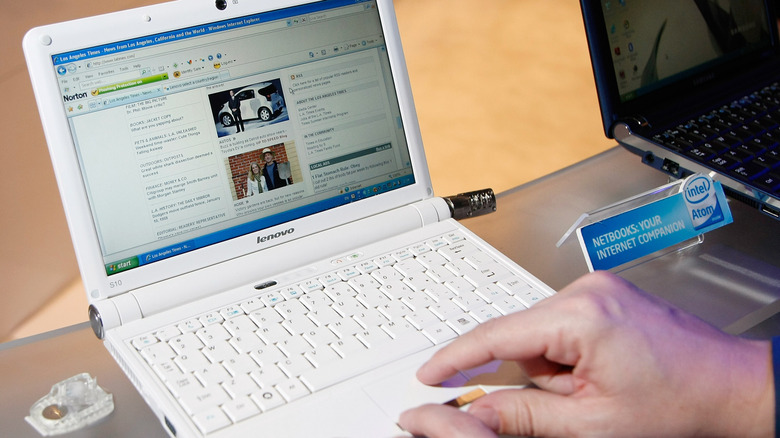
From 2007 to 2010, Netbooks were everywhere. They were small, ultra-portable, and incredibly cheap (often under $300). Devices like the Asus Eee PC promised a "good enough" web experience for people on the go. However, "good enough" turned out to be "painfully slow."
Netbooks were powered by underpowered Intel Atom processors that struggled to run more than two browser tabs at once. The keyboards were cramped, and the screens were tiny. Just as Netbooks were reaching their peak, two things happened: the iPhone became a powerhouse, and the iPad was released. Suddenly, people realized they didn't want a "bad laptop"; they wanted a "great tablet."
Why It Failed:
- Poor Performance: They were often too slow for basic video playback.
- Build Quality: Most were made of cheap, creaky plastic to keep costs down.
- The Tablet Rise: The 2010 iPad proved that you could have portability without a clunky physical keyboard and a slow OS.
Legacy: The DNA of the Netbook evolved into the Chromebook. By stripping away the heavy Windows OS and focusing on a lightweight browser experience, Google eventually perfected the "cheap, portable computer" formula that Netbooks got wrong.
7. The Microsoft Zune: A Better Player with Worse Timing
Poor Zune. It’s the punchline of many jokes today, but if you ask any tech enthusiast who owned one, they’ll tell you: it was actually better than the iPod. The Zune had a bigger screen, a better UI, and a revolutionary "Zune Pass" that allowed for unlimited music streaming years before Spotify existed. It even had "Squirt," a feature that let you wirelessly share songs with other Zune users nearby.
But the Zune arrived in 2006, five years after the iPod had already captured the world’s hearts and pockets. Apple’s "ecosystem lock-in" via iTunes was already too strong. By the time Microsoft released a truly competitive product (the Zune HD), the world was already moving toward smartphones that played music, rendering dedicated MP3 players obsolete.
Why It Failed:
- Timing: Entering a saturated market five years late is an uphill battle even for a giant like Microsoft.
- The "Brown" Factor: Launching with a signature "poop brown" color (officially called "Chocolate") wasn't the aesthetic win Microsoft hoped for.
- Marketing: Apple sold a lifestyle; Microsoft sold a spec sheet.
Legacy: The Zune's "Metro" design language—the clean, typography-heavy interface—was so successful internally that it became the foundation for Windows Phone, Windows 8, and eventually the sleek Xbox dashboard we see today.
Conclusion: Lessons from the Tech Graveyard
Looking back at these "failures," it’s easy to mock the hubris of the companies that built them. But as any editor in this industry will tell you, failure is just the R&D department for the next big thing. The Segway failed as a car-killer but gave us the e-scooter revolution. Google Glass failed as a consumer toy but saved lives in operating rooms.
"Ahead of its time" is often just a polite way of saying the world wasn't ready for the trade-offs. We should celebrate these fads. They represent the moments when we dared to ask "What if?" and learned exactly why "What if" wasn't quite ready for the "Right Now."
FAQ
Q: Why do tech companies keep pushing fads that people don't want? A: Often, it's a case of "solution looking for a problem." Companies develop a new capability (like curved screens or 3D) and try to market it as a necessity to drive new sales cycles when current technology (like flat 1080p TVs) has peaked.
Q: Is VR going to be another tech fad like 3D TV? A: It's unlikely. Unlike 3D TV, which was an "additive" feature to an existing medium, VR/AR is a new computing platform. While it currently faces some "fad" hurdles (bulky headsets, price), the use cases in training, gaming, and remote work are much deeper than just watching a movie with glasses on.
Q: What is the most successful "failed" tech on this list? A: Arguably the Segway. Even though the company itself was sold multiple times and the original product was discontinued in 2020, its impact on urban "last-mile" transportation is a multi-billion dollar reality today.