I get it—spending a small fortune on a new screen feels a bit like buying a supercar just to drive to the grocery store. But in 2026, the gap between "just a TV" and a "gaming command center" has become a chasm. We’ve reached a point where flagship televisions aren't just keeping up with high-end PC monitors; in many cases, they are actually surpassing them. Whether you are hunting for the frame-perfect precision required for Call of Duty or the jaw-dropping HDR brilliance of the latest open-world RPG, your choice of glass matters more than ever.
The market has shifted rapidly. Features that were "premium" just two years ago—like HDMI 2.1 and Variable Refresh Rate (VRR)—are now the baseline. In 2026, the conversation has moved toward 165Hz native panels, 288Hz "turbo" modes for PC gamers, and peak brightness levels that can practically simulate the sun. If you're looking for the short answer: The Samsung S95F OLED is the best overall gaming TV of 2026. It features a blistering 165Hz refresh rate at 4K resolution and an upgraded QD-OLED panel that is 30% more efficient than its predecessors, delivering a brighter image without the increased risk of burn-in.
TL;DR: The Top Gaming TVs of 2026 at a Glance
| Model | Panel Type | Max Refresh Rate | Best For... | Est. Price (65") |
|---|---|---|---|---|
| Samsung S95F | QD-OLED | 165Hz (4K) | The Ultimate All-Rounder | $2,499 |
| LG G5 OLED | MLA-OLED | 165Hz (4K) / 288Hz (1080p) | Professional PC & Console Hybrid | $2,799 |
| TCL QM8K | Mini-LED | 144Hz+ (4K) | Best Value High-Performance | $1,199 |
| Hisense U8QG | Mini-LED | 144Hz (4K) | Sun-Drenched Living Rooms | $1,099 |
| Sony BRAVIA 8 II | WOLED | 120Hz (4K) | PS5 Pro Integration | $1,899 |
Essential Gaming Features to Look For in 2026
Before we dive into the specific models, we need to talk about the "Entry Requirements" for a gaming TV in 2026. If a TV doesn't hit these benchmarks, it shouldn't be in your gaming room.
- The New Refresh Rate Standard: While 120Hz was the goal for years, 2026 has pushed the ceiling. Top-tier sets now offer 165Hz at 4K resolution, providing a smoothness that was previously reserved for enthusiast PC monitors.
- HDMI 2.1 (Full Bandwidth): Look for ports that support 48GBps. This allows for uncompressed 4K/144Hz+ gaming with HDR and 10-bit color.
- Input Lag Below 10ms: For competitive play, every millisecond counts. All our top picks feature "Game Modes" that bring input latency down to 9.9ms or lower.
- VRR and ALLM: Variable Refresh Rate (including G-Sync and FreeSync Premium Pro) is mandatory to eliminate screen tearing, while Auto Low Latency Mode ensures your TV switches to its fastest settings the moment you boot up your console.
1. Samsung S95F OLED: The Uncontested King
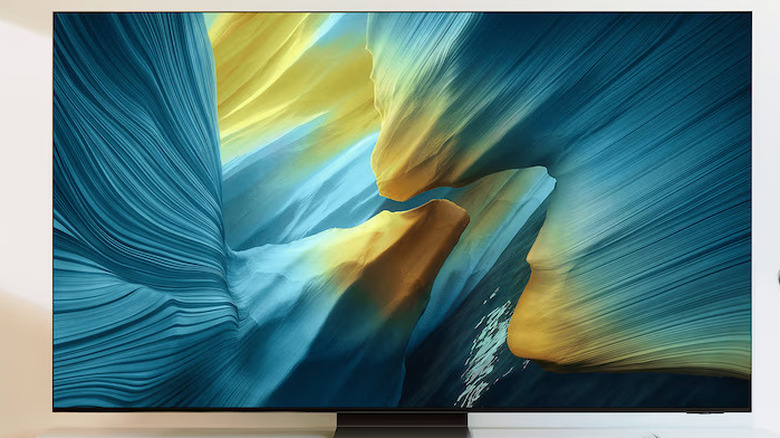
If you want the absolute "end-game" package, the Samsung S95F is it. This isn't just a minor iteration; it’s a technological leap. The 2026 QD-OLED panel utilizes a new phosphorescent material that makes it 30% more efficient than the 2025 S95D model. This means you get higher peak brightness (approaching 2,000 nits in small highlights) with less power consumption and significantly reduced heat.
The standout feature for gamers is the 4K/165Hz native refresh rate. When paired with a high-end PC or the rumored mid-generation console refreshes, the fluidity is unparalleled. Samsung has also perfected its Matte anti-glare coating, which kills reflections without sacrificing the deep, "inky" blacks that OLED is known for.
Expert Insight: "The efficiency gains on the S95F are the real story. By running cooler, Samsung can push the brightness higher for longer periods, making HDR gaming look punchier than any OLED we've tested previously."
| Buy It If... | Don't Buy It If... |
|---|---|
| You want the fastest refresh rate available in 4K. | You have a strict budget under $2,000. |
| You play in a room with some ambient light. | You prefer the 'glossy' look of traditional OLEDs. |
| You want the most vibrant HDR colors (QD-OLED). | You need a dedicated Sony ecosystem for PS5. |
2. LG G5 OLED: The Flagship Powerhouse
The LG G5 remains the benchmark for "Gallery Design" and pure technical versatility. Using Micro Lens Array (MLA) technology and a new Primary RGB tandem panel, the G5 achieves staggering brightness levels. What sets it apart for the most hardcore enthusiasts are its four 48GBps HDMI 2.1 ports.
While it matches the 165Hz at 4K, it includes a "Turbo Mode" that allows for up to 288Hz refresh rates at 1080p resolution—a feature specifically designed for competitive PC gamers who use their TV as a monitor.
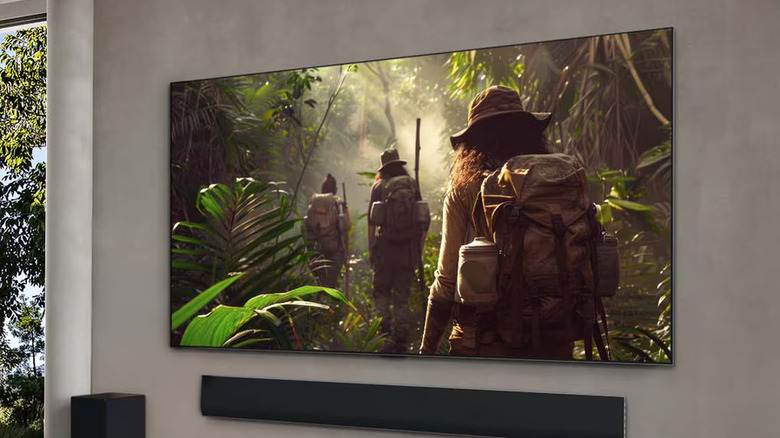
The G5’s webOS 26 "Game Dashboard" is also the best in the business, giving you real-time FPS counters and instant access to VRR settings without exiting your game. It’s an elite, polished experience from top to bottom.
3. TCL QM8K: The Mid-Range Disrupted
If you can’t justify spending $2,500 on a TV, don't worry—you don't lose much by stepping down to the TCL QM8K. For the best value in 2026, the TCL QM8K offers 144Hz+ refresh rates and Mini-LED technology at nearly half the price of the OLED flagships.
The "K" series uses thousands of local dimming zones to mimic OLED's contrast, and while it can't quite match the pixel-perfect blacks, it makes up for it with sheer "heroic HDR" impact. It’s capable of reaching 3,000 nits, making explosions and sunbeams in games like Starfield or Cyberpunk 2077 feel visceral.
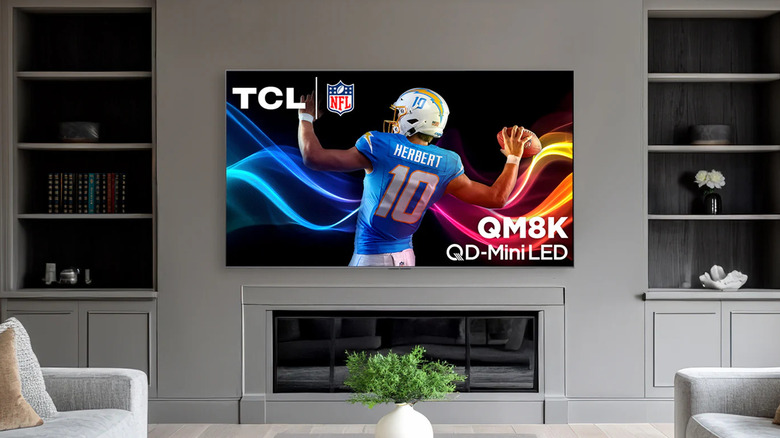
Key Spec: It supports a 288Hz refresh rate at 1080p, making it a "sleeper hit" for competitive PC gamers on a budget.
4. Hisense U8QG: The Bright Room Specialist
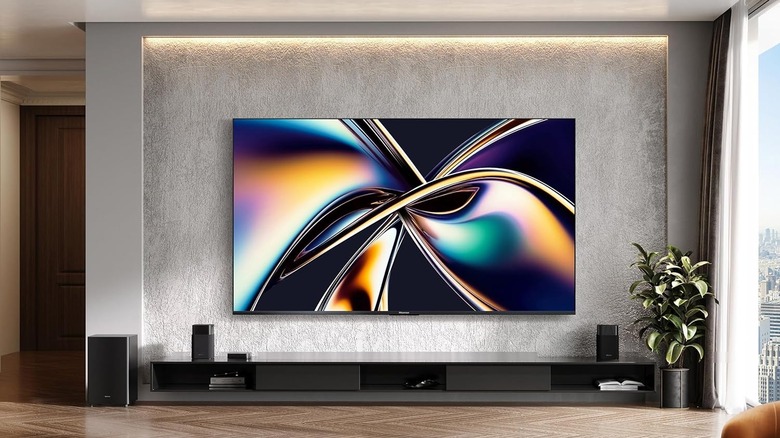
Not everyone games in a basement. If your setup is in a sun-filled living room, the Hisense U8QG is your champion. With a staggering 5,000 nits of peak brightness powered by MiniLED Pro technology, this screen can punch through the most intense glare.
It's not just about brightness, though. Hisense has clocked the input lag at a blistering 9.9ms, and the inclusion of three HDMI 2.1 ports plus a USB-C DisplayPort makes it incredibly versatile for multi-platform gamers.
5. Sony BRAVIA 8 II: The Cinema-Grade Gaming Choice
Sony has always played a different game. The BRAVIA 8 II might not win the "Refresh Rate War" (it tops out at 120Hz), but it wins on image processing and ecosystem synergy. If you are a PS5 Pro owner, this is the "perfect companion."
It features Auto HDR Tone Mapping, which automatically optimizes HDR settings during your PS5 initial setup. The new 'Game Menu' UI is clean and sophisticated, allowing you to adjust black equalization and crosshair overlays with ease.
6. Panasonic Z95B: The Audiophile’s Gaming TV
Most gamers use headsets, but if you want an all-in-one cinematic experience, the Panasonic Z95B is unique. It features an integrated 360-degree Soundscape Pro audio system. It’s essentially a high-end soundbar built directly into the TV's frame.
The HCX Pro AI Processor MK II detects when you’re gaming and automatically adjusts both the low-latency mode and the soundstage to emphasize directional cues (like footsteps), making it a surprisingly viable choice for competitive play without extra speakers.
7. Samsung S90F OLED: The Best Upper Mid-Range
Think of the S90F as the "Lite" version of the S95F. It uses the previous year’s QD-OLED tech, which is still phenomenal. You get the 144Hz performance and the incredible color volume of Samsung’s OLED line, but usually for about $1,000 less than the flagship. It’s the smart buyer’s choice for someone who wants OLED quality without the "early adopter" tax of the 165Hz panels.
8. LG B5 OLED: The Best Entry-Level OLED
The LG B5 is proof that you don't need to be a millionaire to own an OLED. While it uses the slightly less powerful Alpha 8 AI Processor, it remarkably includes four full-bandwidth HDMI 2.1 ports. This is rare for a "budget" OLED and makes it a dream for someone who owns a PS5, an Xbox Series X, and a Switch and wants them all connected simultaneously without a switcher.
Warning: 4 Gaming TVs to Avoid in 2026
Not all "Gaming TVs" are created equal. Avoid these models which, despite their marketing, fail to meet 2026 standards:
- Hisense 98QD5QG: Massive size, but terrible pixel response times. You’ll see significant ghosting in fast-moving games.
- Sony BRAVIA 2 II: Despite the brand name, this is limited to HDMI 2.0 and 60Hz. It’s a movie TV, not a gaming TV.
- LG UA77: Lacks HDMI 2.1 and has a very narrow VRR range, leading to frequent flickering in heavy scenes.
- TCL S551G: Lacks local dimming and high peak brightness, making HDR content look washed out and "flat."
Methodology: How We Rated the Best of 2026
Our ratings aren't just based on a spec sheet. We evaluate every TV using a rigorous scoring system:
- Motion Clarity (30%): How does the panel handle fast movement at 120Hz and 165Hz?
- Latency (25%): Measured input lag using 4K/60Hz and 4K/120Hz signals.
- HDR Performance (20%): Peak brightness in nits and color volume coverage (DCI-P3).
- Connectivity (15%): Number of HDMI 2.1 ports and software features (VRR, G-Sync).
- Value (10%): Performance relative to the MSRP.
Any TV scoring below an 8.0/10 did not make this list.
FAQ
Is 165Hz actually noticeable compared to 120Hz?
For console gamers, not yet, as current consoles are capped at 120Hz. However, for PC gamers, the jump from 120Hz to 165Hz provides a measurable increase in fluid motion and a slight reduction in input lag.
Do I really need four HDMI 2.1 ports?
If you only own one console, no. But if you have a PS5, an Xbox, and a soundbar (which uses the eARC HDMI port), having only two 2.1 ports (a common limitation on older or cheaper sets) becomes a major headache.
Will Mini-LED eventually replace OLED for gaming?
Mini-LED is better for bright rooms and lacks the risk of burn-in, but OLED still wins for "instant" pixel response times and perfect contrast. In 2026, both technologies are excellent; the choice depends on your room's lighting.
The jump to 2026's display technology is the biggest we've seen in a decade. Whether you go for the "Uncontested King" Samsung S95F or the "Mid-Range Disrupter" TCL QM8K, you're stepping into an era of gaming clarity that was unimaginable just a few years ago. Choose your glass wisely—your K/D ratio might just depend on it.