Our Top Picks
- The Rodecaster Pro II is the best overall audio mixers choice for high-end professional production, featuring massive gain and ultra-low noise preamps.
- The Mackie DLZ Creator XS is our top pick for adaptive software features, making it the best audio mixers for streaming for those who want an automated assistant.
- The Zoom LiveTrak L-6 leads the category for portability, offering a compact 10-track solution that fits on any small audio mixers for desk setups.
- For value, the Behringer XENYX 802S and Mackie Mix8 serve as the best budget audio mixers for beginners requiring a reliable USB audio mixers for digital recording experience.
The best audio mixers for creators in 2026 include the Rodecaster Pro II for high-end production and the Mackie DLZ Creator XS for adaptive user modes. For portable or space-saving setups, the Zoom LiveTrak L-6 offers 10-track support and battery power. Budget-conscious creators can opt for the Behringer XENYX 802S or the Mackie Mix8, which provide essential mixing capabilities at a lower price point.
| Model | Best For | Inputs | Key Edge |
|---|---|---|---|
| Rodecaster Pro II | Professional Podcasting | 4 XLR/TRS Combo | 76dB Gain / Bluetooth |
| Mackie DLZ Creator XS | Solo Streamers | 2 XLR/TRS + Stereo | Mix Agent Automation |
| Zoom LiveTrak L-6 | Mobile Creators | 2 XLR/TRS + 4 Stereo | Battery Power / 10-Track |
| Behringer XENYX 802S | Budget PC Setup | 2 XLR + 2 Stereo | Essential USB Out |
| Mackie Mix8 | Simple Analog | 2 XLR + 2 Stereo | Pure Analog Reliability |
Mixer vs. Interface: Which 2026 Workflow Suits You?
Choosing between an audio mixer and an audio interface depends on your workflow requirements. Mixers like the Rodecaster Pro II or Zoom LiveTrak L-6 often function as digital interfaces but offer physical faders, onboard signal processing, and sound trigger pads for real-time control. While dedicated interfaces are built primarily for recording, audio mixers provide loopback functionality and tactile adjustments ideal for live streaming and podcasting.
For many, the appeal of audio mixers for pc lies in the tactile experience. Instead of clicking a mouse to adjust your volume during a broadcast, you have a physical fader. This immediacy reduces monitoring latency and allows you to make split-second decisions. Small audio mixers for desk setups have become increasingly popular in 2026 because they act as the nerve center for a home studio environment, consolidating your microphone, game audio, and music into a single manageable hardware unit.
If you are a solo musician who only cares about the cleanest possible recording for a DAW, a standard interface might suffice. However, if you are a creator who needs to juggle multiple sound sources, chat audio, and sound effects simultaneously, the best audio mixers for streaming will save you hours of software-based troubleshooting.
The Pro Production Standard: RØDECaster Pro II
The RØDECaster Pro II has solidified its position as the professional audio mixers for creators standard. It is no longer just a podcast console; it is a full-blown production studio. What sets it apart is the internal hardware. It features Revolution Preamps that provide ultra-low-noise performance with -131.5dBV equivalent input noise and 76dB of gain. This means even the most power-hungry dynamic microphones sound crisp and clean without needing external boosters.
Key Specs
- Inputs: 4 XLR/TRS combo
- Gain range: 76dB
- Sample Rate: 24-bit/48kHz
- Power Source: USB-C PD
The unit includes eight programmable sound trigger pads that can handle everything from firing off intro music to sending MIDI commands to your computer. With dual USB-C interfaces, you can connect two different computers or mobile devices at once, making it a powerhouse for complex audio mixers for streaming configurations.
Expert Tip: Use the multitrack recording feature to save every input as a separate file. This gives you total control during post-production if one guest is significantly louder than the others.
| Pros | Cons |
|---|---|
| Incredible preamp headroom | Large physical footprint |
| Frequent firmware updates | Premium price point |
| Dual USB-C for two PC setups | Learning curve for advanced FX |
Smart Mixing for Modern Creators: Mackie DLZ Creator XS
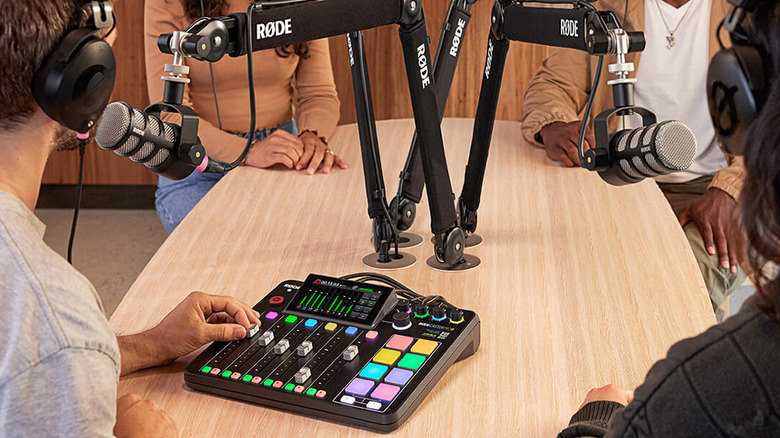
If you aren't an audio engineer, the Mackie DLZ Creator XS is designed for you. This unit is one of the smartest audio mixers on the market thanks to its Mix Agent software. When you first plug in your gear, the mixer guides you through an automated setup of gain staging, ensuring your levels are perfect before you hit record. It takes the guesswork out of phantom power and EQ settings.
Key Specs
- Inputs: 2 XLR/TRS, 1 Stereo, Bluetooth
- Gain range: 80dB (Onyx 80)
- Sample Rate: 24-bit/48kHz
- Power Source: 12V DC
The XS model is the compact brother of the original DLZ, making it one of the better small audio mixers for desk setups that still feel premium. It utilizes high-quality Onyx preamps that provide a professional signal-to-noise ratio. The adaptive user interface allows you to switch between Easy, Standard, and Pro modes, so the mixer grows with your experience level. It is a fantastic usb audio mixers for digital recording that doubles as a tactile companion for your streaming software.
| Pros | Cons |
|---|---|
| Mix Agent simplifies setup | Only two XLR inputs |
| Stunning touch screen | No battery power option |
| High-gain Onyx preamps | External power brick required |
Best for Mobile & Podcast Pods: Zoom LiveTrak L-6
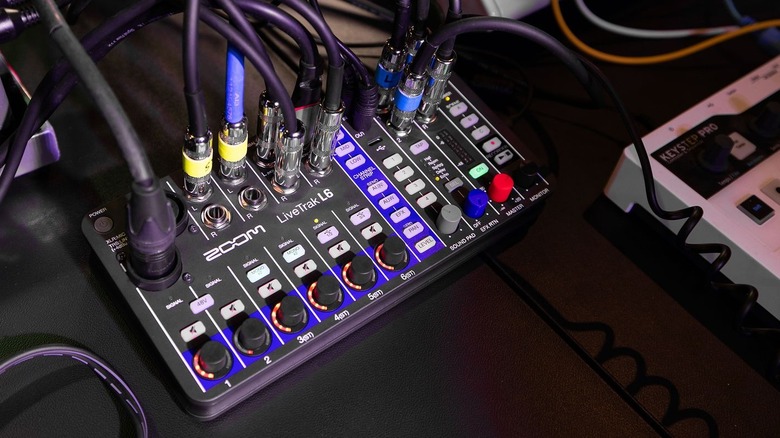
For the creator who is always on the move, the Zoom LiveTrak L-6 is a revelation. It is a 4 channel audio mixers for podcasting that actually supports 10 total tracks of simultaneous recording to a microSD card. What makes it unique in 2026 is its ability to run on standard AA batteries or a USB power bank. You can literally record a high-quality interview in a coffee shop or a park without searching for an outlet.
Key Specs
- Inputs: 2 XLR/TRS, 4 Stereo (TRS)
- Gain range: 50dB
- Sample Rate: 32-bit float / 48kHz
- Power Source: 4 AA Batteries or USB-C
Wait, did we say 32-bit float? Yes. This is one of the few audio mixers in this price bracket that allows for 32-bit float internal recording, virtually eliminating the risk of digital clipping. If your guest suddenly screams into the microphone, the data is preserved without distortion. While it lacks the large motorized faders of bigger units, the knobs are responsive and the multitrack recording capability is unmatched for its size.
| Pros | Cons |
|---|---|
| 32-bit float prevents clipping | Knobs instead of faders |
| Battery powered portability | Limited onboard signal processing |
| 10-track recording to SD | Small screen can be hard to read |
Best Budget Audio Mixers for Beginners
Not every creator needs a $500 console. If you are just starting your journey, the best budget audio mixers offer simple connectivity and clean sound without the bells and whistles. The Behringer XENYX 802S is a classic choice for a pc setup. It provides a simple USB interface that sends your main mix directly to your computer.
While budget mixers often lack sophisticated onboard signal processing, they offer a tactile way to control your volume. However, keep in mind that many entry-level units only output a stereo mix to your DAW, meaning you can't edit your microphone and your music separately after the recording is done.
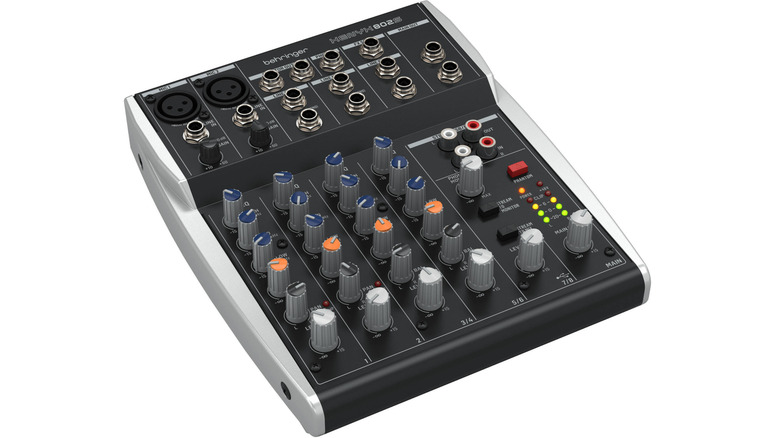
The Mackie Mix8 is another robust alternative. It uses the same Onyx preamps found in more expensive models, ensuring a low-noise floor even at high volumes. Both units are excellent for creators who need to connect a dynamic microphone and maybe a secondary instrument or a dedicated music player for a live stream.
Key Specs (Behringer 802S)
- Inputs: 2 XLR, 2 Stereo TRS
- Gain range: 60dB
- Sample Rate: 16-bit/48kHz
- Power Source: External Adapter
| Pros | Cons |
|---|---|
| Extremely affordable | No multitrack over USB |
| Rugged metal construction | Lower sample rate (16-bit) |
| Simple 'Plug and Play' | Basic EQ controls |
2026 Buying Guide: Preamps, DSP, and Future-Proofing
When selecting a podcast audio mixer, prioritize units with high-quality XLR inputs and preamps, such as Onyx models, to ensure low-noise gain staging. Essential features include multitrack recording for post-production flexibility, phantom power for condenser microphones, and low-latency monitoring. Modern units also offer Bluetooth connectivity and internal signal processing like EQ and compression to streamline the production workflow.
The market has shifted significantly toward hybrid models. While dedicated interfaces like the Focusrite Scarlett series remain a dominant force with over 4 million units sold historically, audio mixers have caught up in terms of raw specs.
What to Look For in 2026
- Bit Depth and Sample Rate: Look for at least 24-bit/48kHz. If you are doing professional music or high-end voiceover, 24-bit/192kHz is the dream, but for most creators, 48kHz is perfectly adequate for video sync.
- Auto-Gain: Features like Mackie's Mix Agent or Rode's internal processing help beginners avoid "clipping" (distorted audio) by automatically setting the loudness levels.
- Loopback Functionality: This is critical for streaming. It allows the mixer to take audio from your PC (like game sound or a Zoom call) and mix it back into the hardware before sending it back to your computer.
- Phantom Power: Ensure your mixer has 48V phantom power if you plan on using professional condenser microphones.
FAQ
What is the most popular audio mixer?
Currently, the Rodecaster Pro II is widely considered the most popular all-in-one mixer for podcasts and high-level content creation due to its integrated design.
Which brand audio mixer is best?
There is no single best, but Rode, Mackie, and Zoom are the industry leaders for creators. Rode excels in podcasts, Mackie in ease of use, and Zoom in portable recording.
What does an audio mixer do?
An audio mixer takes multiple sound signals—like your voice, music, and game audio—levels them out, processes them with EQ or compression, and combines them into a single output for recording or streaming.
What are the different types of audio mixers?
The main types include analog mixers, digital mixers, and hybrid USB mixers. Creators typically prefer hybrid USB mixers because they combine tactile physical controls with the ability to record directly to a computer.
What brand is the best mixer?
For professional studio environments, brands like Yamaha and Allen & Heath are legendary. For digital content creators, Rode and Mackie are generally the top choices.
What brand is a good mixer?
For those seeking a balance of price and performance, Behringer and Mackie offer excellent entry-level mixers that provide professional-grade preamps without a massive investment.
Professional Advice for Your Journey
Choosing between these audio mixers depends on where you are in your growth journey. If you are just starting and budget is your main concern, a simple Mackie Mix8 or Behringer unit will get your voice onto the internet clearly. As your production value increases, moving toward a Mackie DLZ Creator XS or a Rodecaster Pro II will save you hours of work by processing the sound before it ever reaches your computer.
The tactile control of a mixer isn't just a luxury; it’s a way to engage more deeply with your content while you are creating it. Whether you are looking for a professional audio mixers for creators setup or a simple usb audio mixers for digital recording, 2026 has provided more options than ever to make your voice heard with crystal clarity.