Our Top Picks
- Best for Sports: Rokid AR Spatial with 120Hz refresh rate and 600 nits brightness.
- Best for Travelers: Ultra-light 49g frame for 300-inch on-the-go viewing.
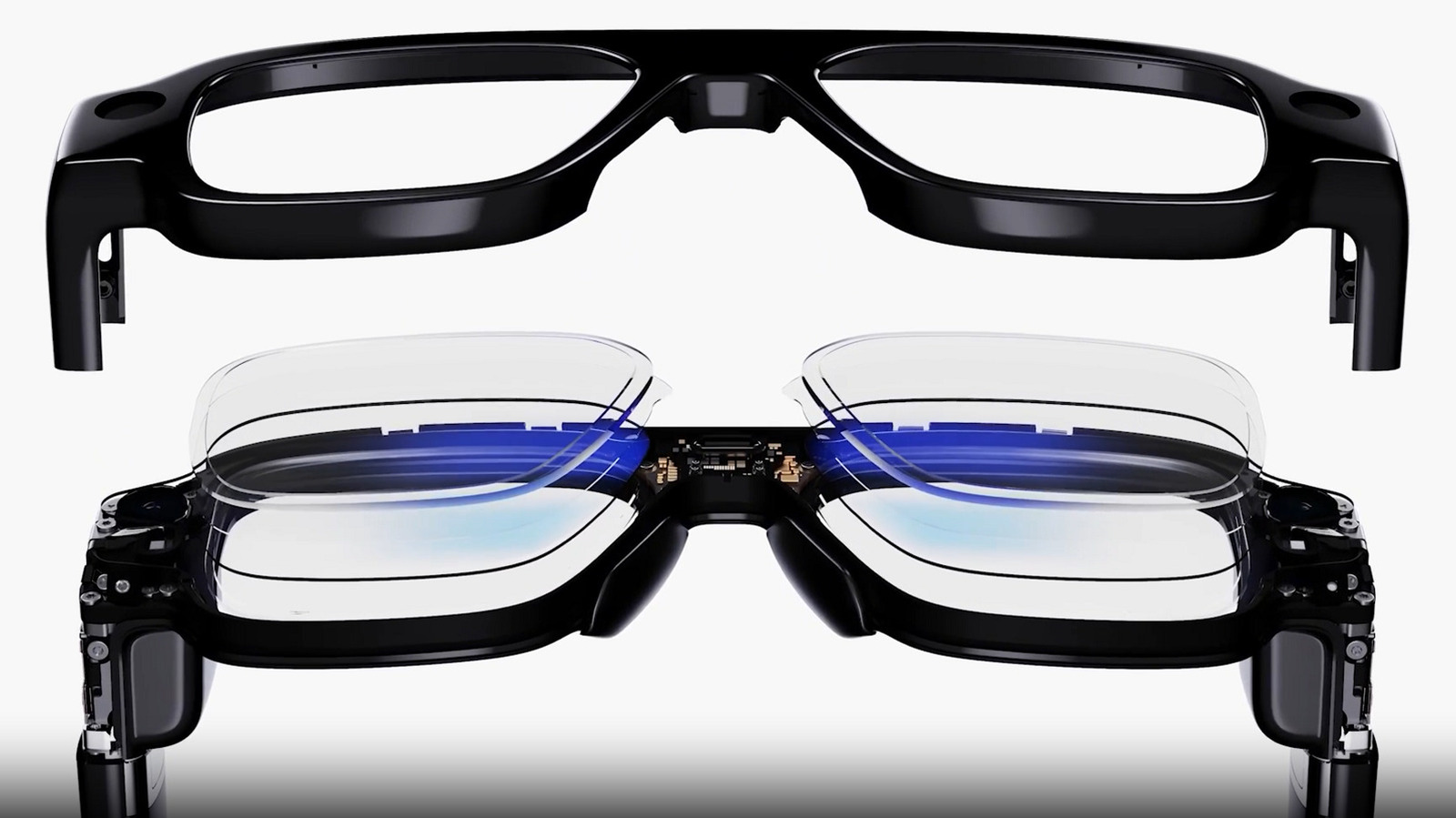
Rokid AR spatial glasses provide a high-performance alternative to traditional screens, utilizing Sony Micro-OLED panels to project a 1200p virtual screen for a private 100-inch World Cup viewing experience. These smart glasses with display are designed to offer a cinema-grade environment that rivals any physical television set, all within a form factor that fits in your pocket.
Solving the World Cup TV Conflict: The 300-Inch Virtual Cinema
The 2026 World Cup is here, but the battle for the living room TV is just as intense as the matches. With the expanded format featuring 104 matches, Matchday 3 scheduling creates an inevitable overload where multiple high-stakes games happen simultaneously. For many households, this translates into a "TV conflict"—one person wants the football, another wants a movie, and the kids want their gaming console. Enter the Rokid AR Spatial, arguably the best smart glasses with display for sports fans who refuse to compromise.
These lightweight video display glasses transform any seat into a front-row experience. By donning the headset, you aren't just watching a small screen; you are entering a portable 100 inch tv glasses environment where the match takes center stage. For those who want more, the virtual cinema experience can scale up, effectively simulating a virtual screen size of 215 inches at a distance of 6 meters, or even pushing toward a 300-inch boundary in a dark room.
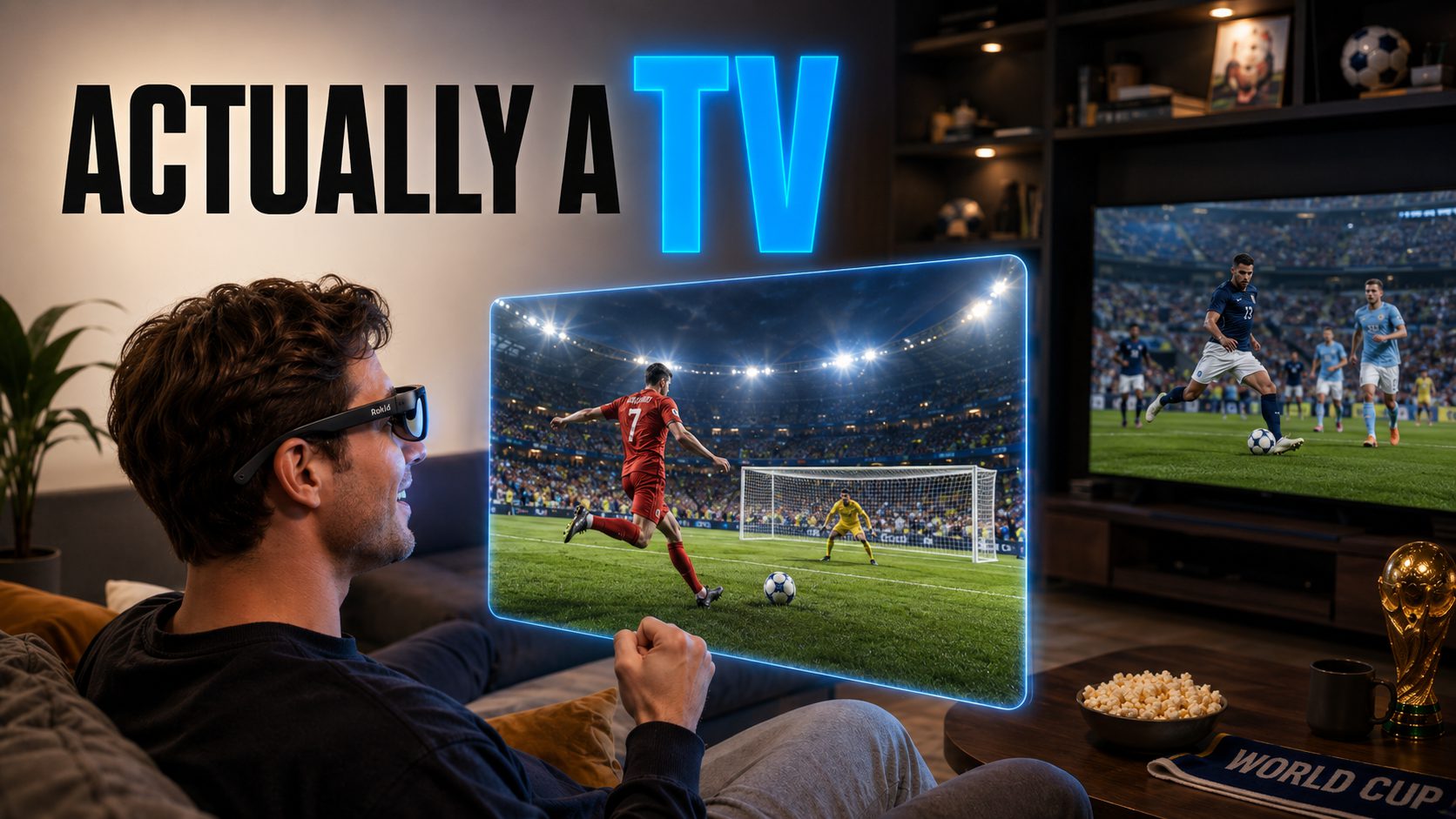
This solves the household friction point immediately. While your family enjoys a blockbuster on the main 4K TV, you are sitting on the same couch immersed in a high-definition broadcast of a quarter-final. The level of immersion provided by this immersive sports viewing tech is unmatched by traditional tablets or phones, because it removes the distractions of the physical room, leaving only you and the beautiful game.
Technical Deep-Dive: Sony Micro-OLED and 120Hz Fluidity
The foundation of any high-quality display is the panel technology. Rokid utilizes dual Sony Micro-OLED panels to deliver exceptional 1200p resolution quality. Unlike standard LCD screens found in older headsets, Micro-OLED allows for deep blacks and vibrant colors, essential for seeing the green of the pitch and the motion of the ball with lifelike accuracy.
In the world of fast-paced sports like soccer, the refresh rate performance is the difference between a blurry mess and a crisp goal. The Rokid Max series provides a 120Hz refresh rate—and in some specialized modes, it can push even higher—to ensure that motion blur is virtually eliminated. This high frequency is critical for preventing the dizziness sometimes associated with wearable displays. When a striker takes a shot at 100 km/h, the ball remains a sharp object across your field of view (FOV), rather than a ghostly trail.
When watching matches during the day, brightness is another hurdle. These ar glasses with display boast up to 600 nits of perceived brightness, which allows for clear viewing even in well-lit rooms. While waveguide-based smart glasses with display are designed for situational awareness (allowing you to see the world through the text), Rokid’s virtual screen headsets focus on total immersion. You get a 50-degree field of view (FOV) that fills your primary vision, effectively acting as a personal IMAX theater for every goal and yellow card.
The market has responded enthusiastically to this tech. Rokid reported an 800% year-on-year surge in smart glasses sales as of June 2026, as fans globally realized that a high-end display doesn't need to be mounted on a wall.
The sub-50g Advantage: Comfort and Prescription Adjustability
For a device meant to be worn through a 90-minute match plus extra time and penalties, ergonomics are everything. Many older VR headsets failed because they were too heavy, but the newest ar glasses for watching sports have solved this. The Rokid Max series utilizes a TR96 polymer titanium frame to achieve a remarkably low weight. Specifically, the Rokid Max AR glasses weigh approximately 75 grams for the full assembly, though the core weight distributed on the bridge of the nose feels significantly lighter, often closer to a sub-50g weight profile in modern iterations.
One of the most innovative features is the diopter adjustment dial located on top of the frames. For the millions of sports fans who wear glasses, this is a game-changer. The integrated diopter adjustment system supports myopia correction from 0.00D to -6.00D. By simply turning the dial, you can calibrate each eye independently, removing the need for uncomfortable prescription inserts or wearing the device over your existing glasses. This ensures that the 1200p screen remains razor-sharp regardless of your natural vision.
Ecosystem and Compatibility: USB-C and AI Integration
Using these video display glasses is as simple as "plug and play." They utilize USB-C DisplayPort Alt Mode, making them natively compatible with the iPhone 15 and 16 series, most modern Android flagship phones, and the latest MacBooks.
Quick Compatibility Check
- iOS: iPhone 15/16 Pro and Pro Max (Direct USB-C connection).
- Android: Samsung S21/S22/S23/S24 series, Google Pixel 8/9.
- Consoles: Steam Deck, ROG Ally, and Nintendo Switch (requires dock or adapter).
- Laptops: Any device with a USB-C port that supports video output.
Beyond just being a screen, the 2026 ecosystem introduces ai smart glasses with display capabilities. Leveraging the Snapdragon AR1 chip and integrated AI assistants like ChatGPT-5, these glasses can provide real-time translation for 89 different languages. If you are watching a Spanish broadcast of the World Cup but don't speak the language, the glasses can overlay real-time translated subtitles onto the bottom of your 100-inch virtual screen. Additionally, you can pull up live sports stats—possession percentages, player heat maps, and live betting odds—without ever taking your eyes off the action.
The only hardware limitation to keep in mind is power. Since these glasses draw power from the host device, they generally offer about 3 to 4 hours of continuous viewing when connected to a smartphone. For a single World Cup match, this is more than enough, but for a back-to-back triple-header, you might want a wireless charging pad or a specialized hub to keep your phone juiced up while you watch.
Rokid vs Xreal: Which Display Glasses Win in 2026?
When searching for the best smart glasses with display, the primary competition usually boils down to Rokid vs Xreal. Both brands lead the market, but they prioritize different user experiences.
| Feature | Rokid Max Series | Xreal Air 2 Series |
|---|---|---|
| Display Tech | Dual Sony Micro-OLED | Dual Sony Micro-OLED |
| Max Refresh Rate | 120Hz (Higher in Gaming Modes) | 120Hz |
| Weight | ~75g (Extremely Balanced) | ~72-79g |
| Diopter Adjustment | Built-in (0.00 to -6.00D) | Requires Prescription Inserts |
| Field of View | 50 Degrees | 46 Degrees |
| Brightness | 600 Nits | 500 Nits |
| Best For | Prescription users & Cinema | AR Productivity & Gaming |
The rokid ar glasses review 2026 consensus suggests that while both provide excellent visuals, Rokid's built-in diopter dial gives it the edge for accessibility. If you share the glasses with friends, anyone can adjust the focus in seconds, whereas the competition requires custom lenses for each user.
FAQ
What can smart glasses with a display actually do?
Smart glasses with a display act as a wearable high-definition monitor. They can mirror the screen of your smartphone, laptop, or gaming console, allowing you to watch movies, stream live sports, play video games, or work on spreadsheets on a massive virtual screen that only you can see. Advanced models also feature AI overlays for real-time translation and navigation.
Can smart glasses with displays be used with prescription lenses?
Yes, but the method varies by brand. Some use magnetic prescription inserts that you must order separately. However, advanced models like those from Rokid include a built-in diopter adjustment dial that allows users with myopia (nearsightedness) to adjust the focus directly on the hardware, often supporting ranges from 0.00D to -6.00D without needing extra lenses.
Can you watch movies or videos on smart glasses with screens?
Absolutely. This is one of the primary use cases for these devices. Because they use high-end Micro-OLED technology, they provide a cinema-like experience with high contrast and vibrant colors. They are compatible with all major streaming apps like Netflix, YouTube, and Disney+, provided your host device can run them.
What is the difference between AR glasses and smart glasses with displays?
Standard smart glasses often focus on "audio only" or basic "heads-up displays" (HUD) for notifications and directions using waveguide technology. Smart glasses with displays, often categorized as AR spatial glasses, focus on the visual experience. They project a large, high-resolution virtual screen into your field of vision, prioritizing immersion for media consumption and gaming over simple text overlays.
Are smart glasses with displays safe for your eyes?
Most high-quality smart glasses are designed with eye safety in mind, featuring low blue light emissions and flicker-free certifications from organizations like TÜV Rheinland. Because the virtual screen is projected at a simulated distance (usually several meters away), it can actually cause less eye strain than staring at a smartphone held close to your face, though users should still follow the 20-20-20 rule for eye health during long sessions.