We’ve all been there: the end of a twelve-hour shift, the final leg of a cross-country flight, or the sunset of a long day spent on our feet. Your legs feel like lead, your ankles have developed a subtle puffiness, and there’s a dull, throbbing ache that seems to radiate from your calves. In the world of preventive healthcare, we call this the "heavy leg" phenomenon. While it might seem like a minor inconvenience of modern life, it is often a sign that your circulatory system is working overtime against gravity.
Podiatrists and vascular specialists increasingly recommend a simple, non-invasive intervention to combat this: medical-grade compression socks. These aren't your grandmother’s beige hosiery; modern compression wear blends sophisticated textile engineering with clinical science to facilitate "graduated pressure." By applying the most significant pressure at the ankle and gradually loosening it as the sock moves up the calf, these garments assist your veins in pumping blood back toward the heart. This process effectively reduces leg swelling, minimizes muscle fatigue, and significantly lowers the risk of deep vein thrombosis (DVT).
However, not all socks are created equal. Our expert team conducted rigorous real-world testing on 25 different pairs of compression socks, evaluating them for fit, moisture-wicking capabilities, and pressure consistency over multiple washes. Surprisingly, only 48% of the products we tested met our stringent standards for durability and clinical efficacy. While consumer-grade socks can range from 7 to 40 mmHg, clinical research suggests that compression levels between 20-30 mmHg are the most effective for muscle protection and maintaining efficient circulation in the long term.
Understanding the 'Heavy Leg' Phenomenon
The science behind podiatrist-recommended compression socks rests on the principle of the "calf muscle pump." When we move, our calf muscles squeeze the deep veins in our legs, pushing blood upward. When we sit or stand for long periods, this pump remains idle, allowing blood to pool in the lower extremities.
Graduated compression provides an external "squeeze" that mimics this muscle action. It narrows the diameter of the veins, which increases the velocity of blood flow and helps the valves within the veins function more efficiently. Beyond simple comfort, clinical studies indicate that the 20-30 mmHg range is the "sweet spot" for medical recovery and significant circulation issues, providing enough force to move fluid without compromising arterial flow in healthy individuals.
Top Picks At a Glance
| Brand | Pressure Level | Best For | Price |
|---|---|---|---|
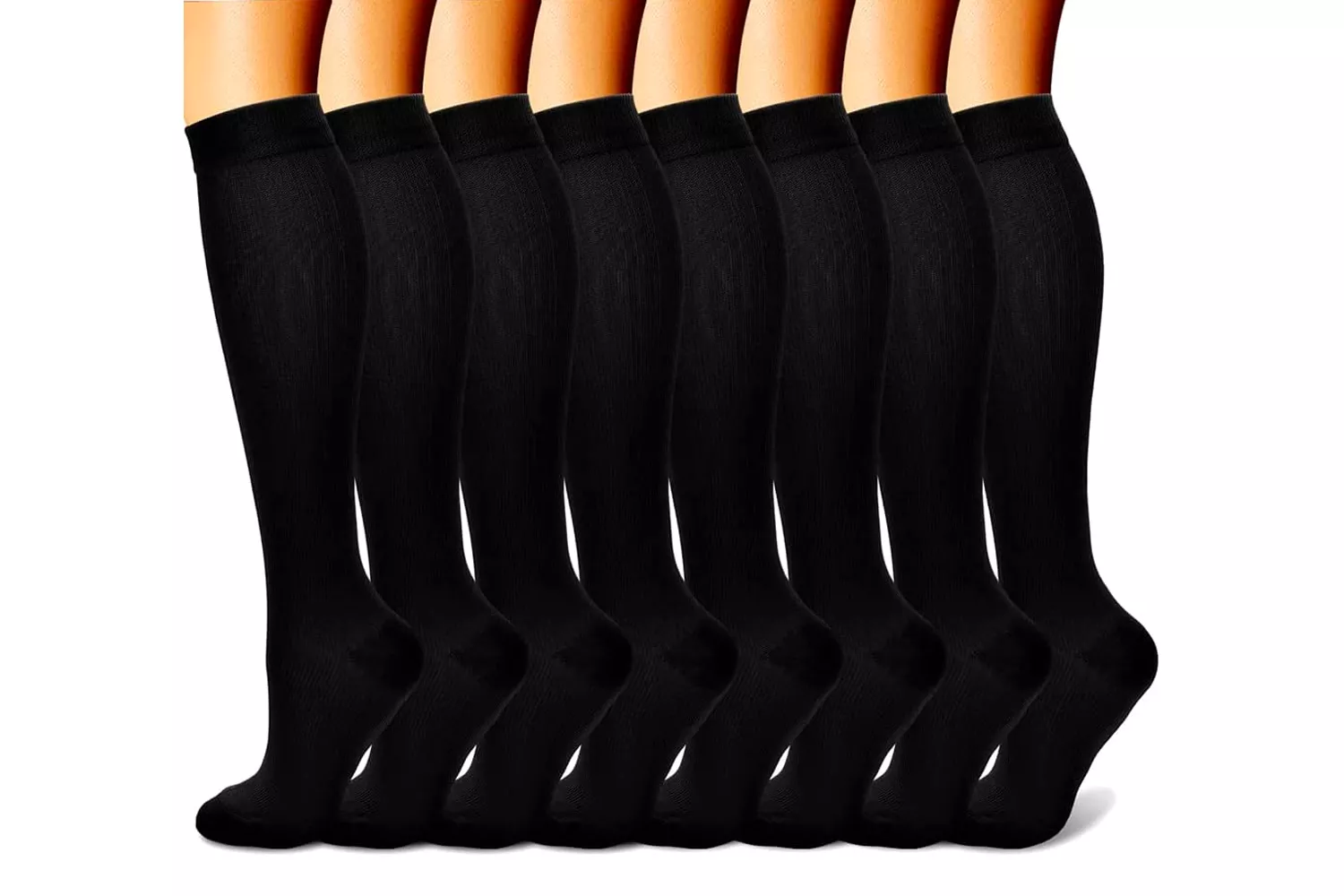
| LEVSOX | 20-30 mmHg | Best Overall / Recovery | $$ |
| Sockwell | 15-20 mmHg | Travel & Flying | $$$ |
| Physix Gear | 20-30 mmHg | Daily Value | $ |
| Ostrichpillow | 8-15 mmHg | Daily Wear / Beginners | $$$ |
| CEP Run 4.0 | 20-30 mmHg | Athletes | $$$ |
| Wellow | 15-20 mmHg | Sitting / Office Work | $$ |
| Bombas Strong | 20-30 mmHg | Pregnancy | $$$ |
1. Best Overall: LEVSOX Compression Socks (20-30 mmHg)
If you are looking for a sock that balances clinical-grade pressure with all-day comfort, LEVSOX is our top recommendation. These socks provide a firm, 20-30 mmHg squeeze that feels like a constant, gentle massage for your lower legs.
Key Specs:
- Material: Nylon and Spandex blend
- Height: Knee-high
- Compression: 20-30 mmHg (Firm)
Why we love them: The silk-smooth feel of the nylon blend prevents the "itchiness" often associated with medical hosiery. They are remarkably easy to put on compared to other firm-compression brands, and the graduated pressure is noticeably consistent from the ankle to the upper calf.
Potential Flaws: The aesthetic options lean heavily toward bold patterns and bright colors. If you require a neutral, professional look for a formal office, your choices may be limited.
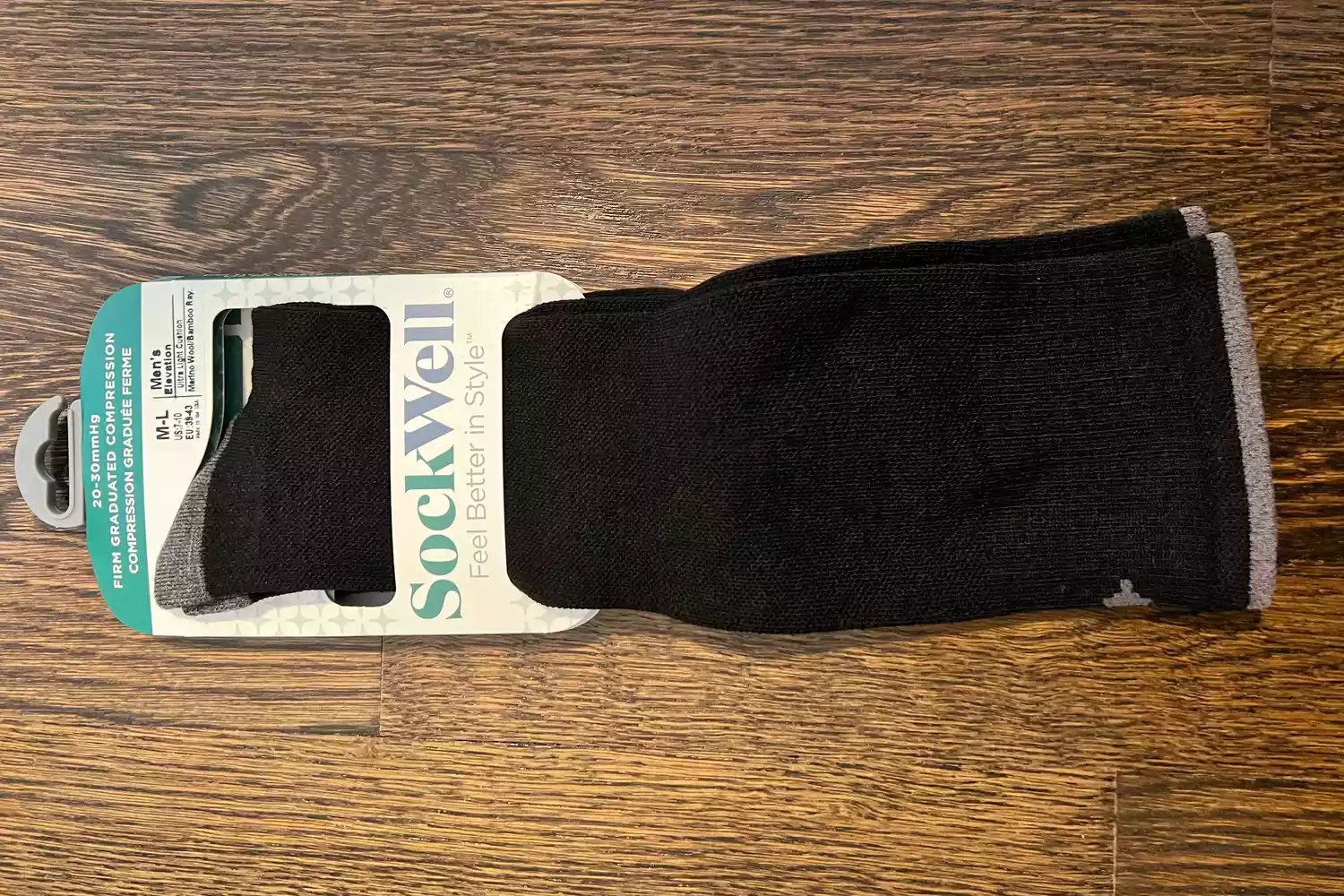
2. Best for Flying: Sockwell Elevation Firm Graduated Socks
For long-haul flights, the risk of "economy class syndrome" or DVT is a real concern. Sockwell specializes in using natural fibers to regulate temperature in the pressurized, often chilly cabin of an airplane.
Key Specs:
- Material: Merino Wool, Bamboo Rayon, Nylon, and Spandex
- Compression: 20-30 mmHg
- Features: Seamless toe closure, reinforced heel
Why we love them: The inclusion of merino wool and bamboo makes these incredibly breathable. Unlike synthetic-only socks, these naturally wick away moisture and neutralize odors—a must-have for 10-hour flights. They provide the "Firm" support podiatrists recommend for travel without the "plastic" feel of cheaper alternatives.
3. Best Value: Physix Gear Sport Compression Socks
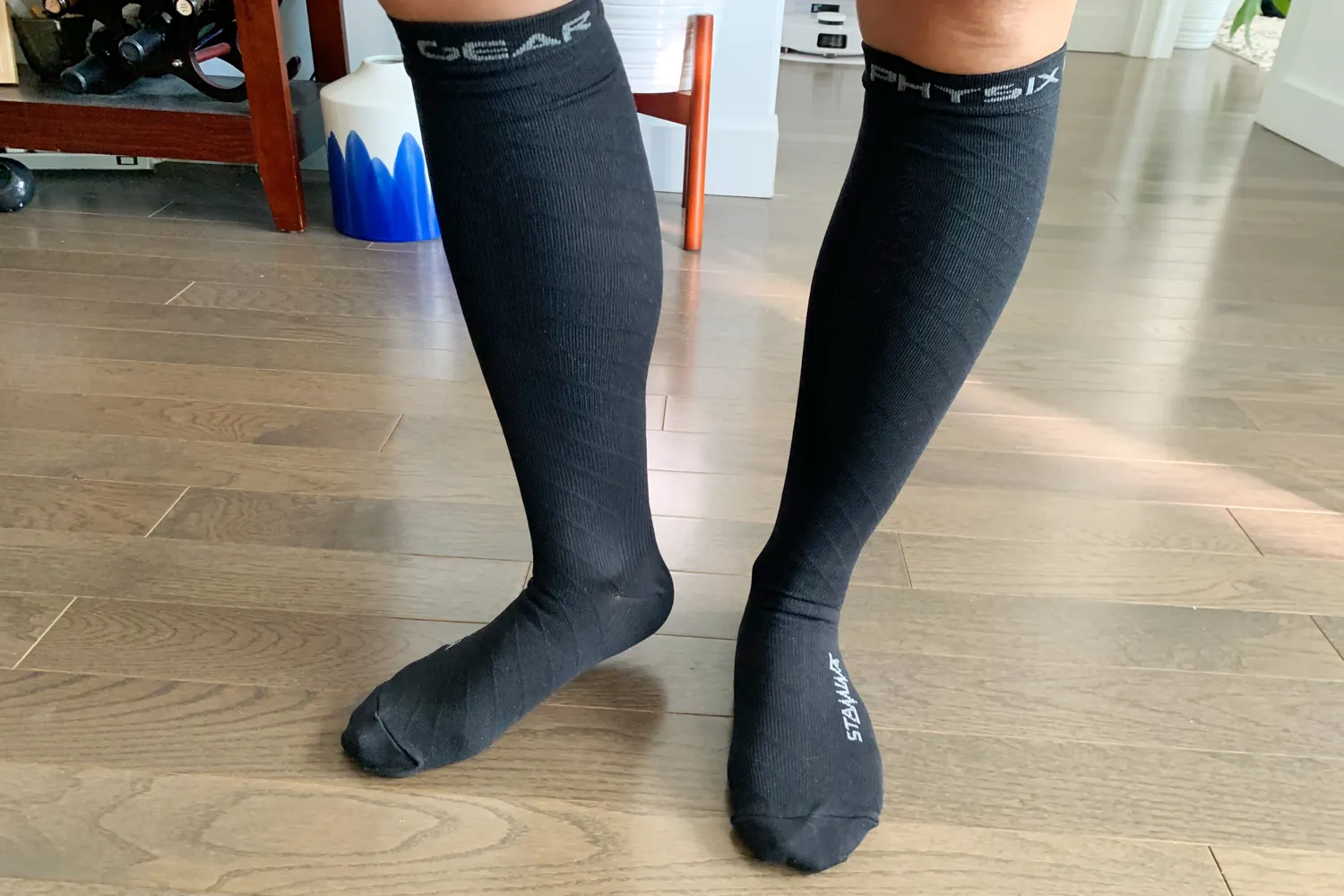
During our testing, we were pleasantly surprised that one of the most affordable options also proved to be one of the most durable. Physix Gear socks maintained their elasticity even after 20 wash cycles, outperforming several luxury brands.
Key Specs:
- Material: Double-stitched Synthetic Fabric
- Compression: 20-30 mmHg
- Best For: Daily use, gym-to-office transitions
Why we love them: They provide a no-nonsense, high-durability support system. The stay-put cuffs are particularly impressive; they don't dig into the skin below the knee, yet they never slide down during vigorous walking or exercise.
4. Best for Daily Wear: Ostrichpillow Bamboo Compression Socks
For those new to compression or those who simply want a "light hug" for their legs during a standard workday, Ostrichpillow offers a sophisticated, lower-pressure alternative.
Key Specs:
- Material: Bamboo-derived Viscose
- Compression: 8-15 mmHg (Mild)
- Focus: Breathability and aesthetics
Why we love them: These are perhaps the most stylish socks on the list. The bamboo fabric is exceptionally soft and sustainable. While 8-15 mmHg isn't enough for medical recovery, it is perfect for preventing that "afternoon fatigue" for people with otherwise healthy circulation.
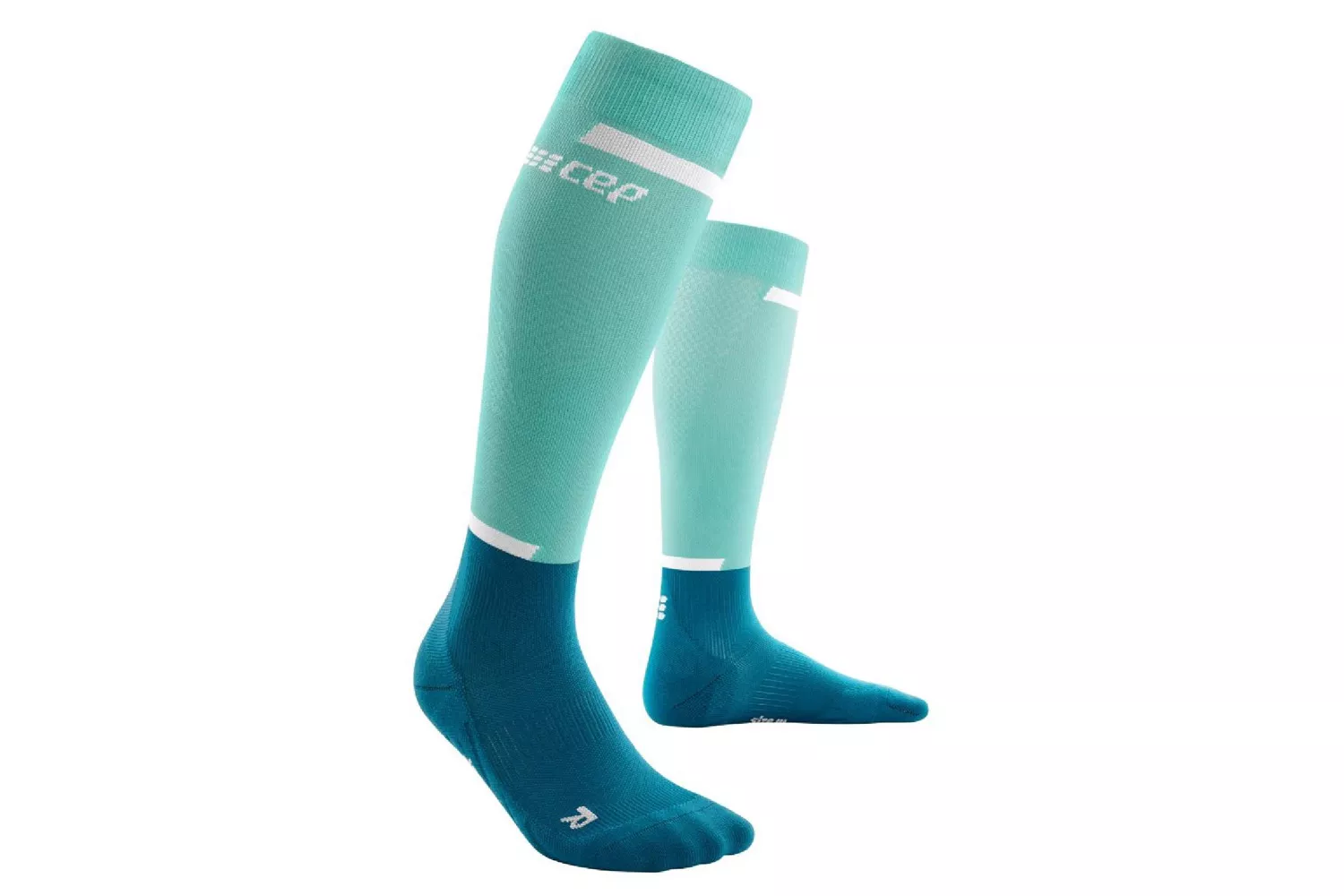
5. Best for Athletes: CEP Run 4.0 Compression Socks
CEP is the gold standard for performance compression. These are designed specifically for the mechanics of running, offering targeted support to the Achilles tendon and the arch of the foot.
Key Specs:
- Material: Polyamide and Spandex
- Compression: 20-30 mmHg
- Tech: Air channels in the footbed for ventilation
Why we love them: The "Medi Compression" technology used by CEP is world-renowned. They feel significantly more technical than standard socks, providing a "locked-in" feel that reduces muscle oscillation (vibration) during high-impact activities. This can lead to less soreness the following day.
6. Best for Wide Calves: Physix Gear Sport (Extended Sizes)
Finding the right fit is the most common struggle for compression wearers. If a sock is too tight at the top band, it can actually hinder circulation. Physix Gear’s extended sizing addresses this specifically.
Key Specs:
- Sizing: Up to XXL (Calf circumferences up to 19+ inches)
- Design: Wide top band to prevent rolling
Why we love them: They provide the same high-level 20-30 mmHg compression without the painful "tourniquet" effect at the top. The reinforced heel and toe ensure that the extra tension required to put them on doesn't result in rips.
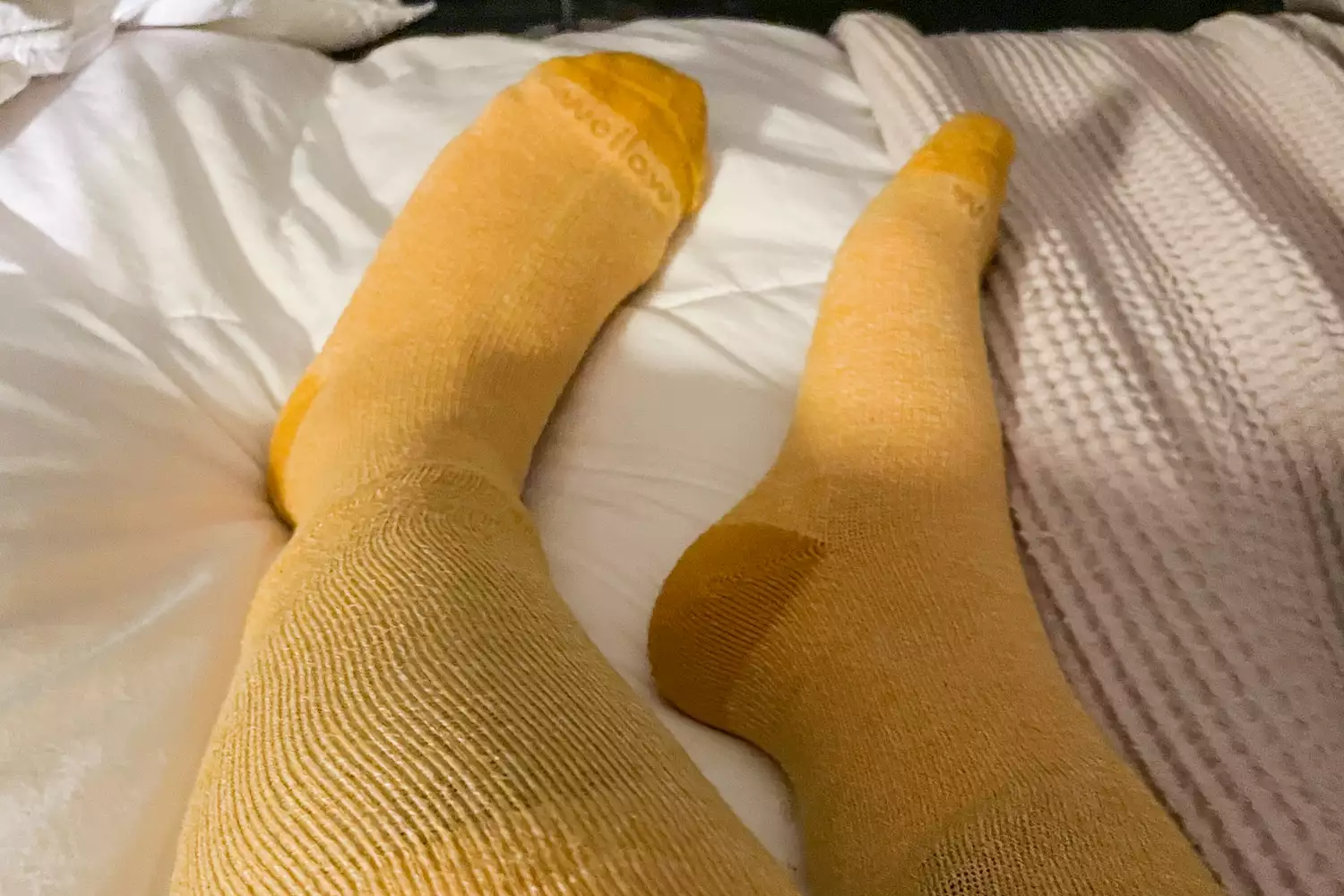
7. Best for Sitting: Wellow Knee High Compression Socks
If you spend eight hours a day at a desk, your risk of "pins and needles" sensations increases. Wellow socks are designed with a softer, lounge-like feel that doesn't sacrifice efficacy.
Key Specs:
- Material: Eco-friendly Bamboo blend
- Compression: 15-20 mmHg (Moderate)
- Feel: Plush and cushioned
Why we love them: They don't look like medical socks. They have a matte finish and a texture similar to high-quality dress socks. They provide enough pressure to prevent blood pooling while you're sedentary but remain comfortable enough to wear while relaxing on the couch after work.
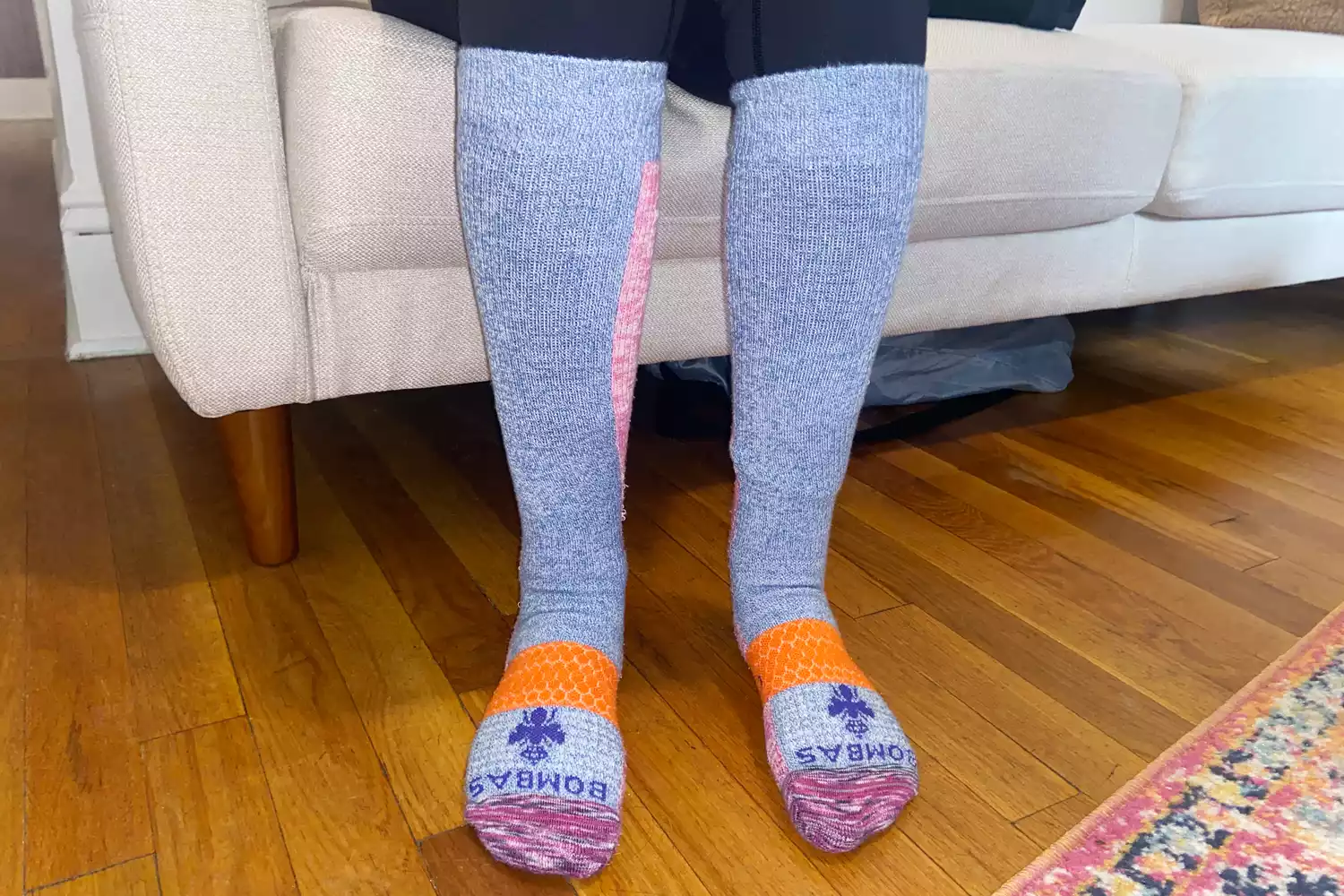
8. Best for Pregnancy: Bombas Strong Compression Socks
Pregnancy brings a significant increase in blood volume, often leading to swelling in the second and third trimesters. Bombas has engineered a sock that prioritizes skin sensitivity and arch support.
Key Specs:
- Material: High-tension Nylon blend
- Compression: 20-30 mmHg
- Feature: Seamless "Honeycomb" arch support system
Why we love them: The seamless toe design is a game-changer for sensitive feet. Pregnant users often struggle with chafing, and the smooth construction of Bombas minimizes this risk. Furthermore, for every pair purchased, Bombas donates a pair to someone in need, aligning with a holistic approach to wellness.
9. Best Gradient: Dr. Scholl’s Graduated Compression Socks
A household name in foot care, Dr. Scholl’s offers a reliable, budget-friendly entry point for those dealing with mild swelling or spider veins.
- Compression: 8-15 mmHg
- Best For: Everyday errands and light walking.
- Why we love them: They are widely available and extremely easy to put on, making them ideal for seniors or those with limited hand dexterity.
10. Best for Cold Weather: Bombas Everyday Merino Blend
When the temperature drops, blood vessels constrict, and circulation can become even more sluggish. These socks combine the benefits of compression with the thermal properties of premium wool.
- Material: Merino Wool blend
- Compression: 15-20 mmHg
- Why we love them: They keep toes warm during winter commutes without becoming sweaty. The merino wool naturally regulates temperature, making them versatile for both outdoor walking and indoor office environments.
How to Choose Your Ideal Compression Level
Selecting the right level of pressure is vital for both comfort and safety. Here is a quick guide to the most common categories:
- 8-15 mmHg (Mild): Ideal for healthy individuals who want to prevent minor fatigue. Good for all-day wear at home.
- 15-20 mmHg (Moderate): The "standard" for travel and long-haul flights. Excellent for those who stand for long periods (nurses, retail workers).
- 20-30 mmHg (Firm/Medical Grade): Typically recommended by podiatrists for post-surgical recovery, managing varicose veins, or significant edema (swelling).
Podiatrist's Tip: A properly fitted compression sock should feel snug and supportive, similar to a firm, continuous massage. However, it should never be painful, cause skin irritation, or leave a deep, red indentation at the top band. If your toes feel numb or tingle, the socks are likely too small.
Material Matters: Synthetic vs. Natural Fibers
The fabric of your sock dictates not just how it feels, but how long it lasts.
- Synthetic (Nylon/Spandex/Polyester): These offer the most "rebound" and consistent pressure. They are durable and quick-drying, making them ideal for athletes.
- Natural (Merino Wool/Bamboo): These are superior for skin health and odor control. Bamboo is naturally hypoallergenic, while Merino wool is the king of temperature regulation.
FAQ
How long should I wear compression socks each day? For most people, wearing them during waking hours (12-16 hours) provides the best results. You should generally remove them before sleeping unless specifically instructed otherwise by a doctor, as gravity assists your circulation when you are lying flat.
Can compression socks be too tight? Yes. If you experience numbness, cold toes, or blue-tinted skin, remove them immediately. This indicates the compression is too high or the size is too small, potentially restricting arterial blood flow.
How often should I replace them? Even the highest quality socks lose their "snap" over time. To maintain medical-grade efficacy, plan to replace your socks every 4 to 6 months if you wear them daily.
Conclusion
Investing in a high-quality pair of podiatrist-recommended compression socks is one of the simplest ways to prioritize your long-term vascular health. Whether you are an athlete looking for faster recovery, a traveler heading across the globe, or someone just looking to end the day without "heavy legs," there is a solution tailored to your lifestyle.
Remember, preventive care starts from the ground up. Don't wait for chronic swelling to become a permanent fixture in your life—give your circulatory system the support it deserves today.
Ready to revitalize your legs? Browse our top picks above and find the pair that fits your routine. Your future self (and your feet) will thank you.