Quick Facts
- Optimal Charging Location: Devices should be charged outside the bedroom on flat, non-flammable surfaces like kitchen countertops or stone consoles to ensure proper airflow and heat dissipation.
- Sleep Hygiene Benefit: Removing smartphones eliminates the "digital tether," significantly reducing blue light exposure and preventing the late-night cortisol spikes that disrupt deep sleep cycles.
- Fire Safety Statistic: Charging a device on soft surfaces—such as pillows, duvets, or carpets—can increase battery heat retention by up to 40%, drastically increasing the risk of thermal runaway and battery combustion.
- 2026 Design Forecast: Approximately 78% of new minimalist home designs now incorporate a "Centralized Tech Hub" or "Drop Zone" located in entryways or kitchens, specifically intended to keep electronics out of the sanctuary space.
- Material Choices: Sustainable materials like oak, bamboo, and recycled leather are the preferred choices for 2026 charging stations, replacing heat-trapping plastics with breathable, aesthetically pleasing alternatives.
The Invisible Intruder: Why Your Nightstand is Ruining Your Rest
We have long treated our nightstands as the command centers of our lives. They hold our water, our books, and—most detrimentally—our smartphones. However, as we move toward a more holistic understanding of preventive healthcare in 2026, we are beginning to recognize the smartphone as an "invisible intruder." It isn't just a tool; it is a gateway to the external world that keeps our brains in a state of high alert, or what we call "digital tethering."
When your phone sits inches from your head, your brain remains subconsciously prepared for an alert. This low-level vigilance prevents you from entering the deeper, more restorative stages of REM sleep. Furthermore, the blue light emitted by these screens suppresses melatonin production, shifting your internal clock and making it harder to wake up the next morning. By physically removing the device from the room, we break the psychological link between the bedroom and the stresses of the outside world.
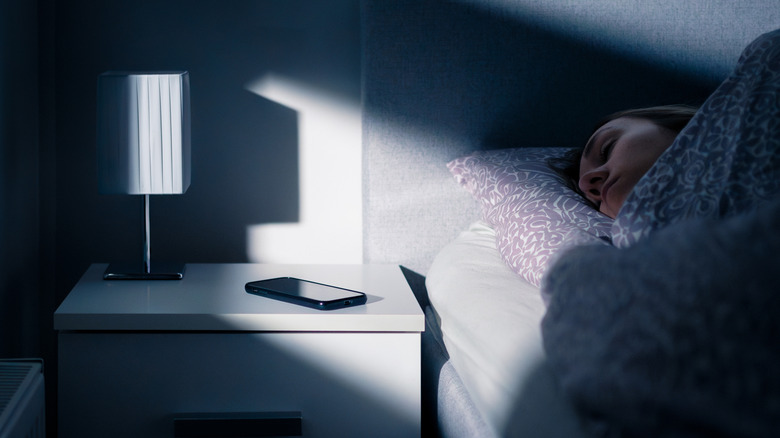
Creating a tech-free bedroom isn't about deprivation; it's about the luxury of true rest. It is a commitment to a sanctuary where the only things allowed are those that promote recovery, intimacy, and peace.
Fire Safety 101: The Hidden Danger Under Your Pillow
Beyond the psychological impact, there is a very real, physical danger to our current charging habits. We have all been guilty of it: plugging in the phone and tucking it under a pillow or leaving it on the duvet while we scroll. This is a significant safety hazard that most people underestimate.
Modern lithium-ion batteries generate heat during the charging process. On a hard, flat surface, this heat dissipates naturally. However, soft surfaces like bedding act as insulators. Data shows that charging smartphones on bedding or carpets can increase heat retention by up to 40% compared to a kitchen countertop. When heat cannot escape, the battery temperature rises, which can lead to "thermal runaway"—a state where the battery enters an uncontrollable, self-heating cycle that often results in fire or explosion.
Lily’s Tip: If you must charge a device, always ensure there is at least three inches of clear space around the device for ventilation. Never, under any circumstances, charge a device that is covered by fabric or tucked into a corner of the bed.
In the 2026 modern home, the goal is to identify "Safe Charging Zones." These are well-ventilated areas, ideally made of non-combustible materials like stone, metal, or treated wood, located far from sleeping quarters.
2026 Bedroom Trends: Embracing 'Soft Minimalism'
The interior design world has pivoted sharply away from the "connected home" gadgets of the early 2020s toward a philosophy known as 'Soft Minimalism' or 'Japandi.' This aesthetic prioritizes natural materials, tactile textures, and, most importantly, the absence of visible technology. The bedroom is now being reclaimed as a "low-radiation sanctuary."
The 2026 bedroom features built-in storage solutions crafted from oak, bamboo, and linen. Rather than having a mess of cables on the nightstand, we are seeing a total removal of outlets near the bed. Instead, these spaces are filled with air-purifying plants, beeswax candles, and analog alarm clocks.
One of the most telling statistics from the 2026 Home Design Forecast is that 78% of modern minimalist homes now feature a dedicated 'Centralized Tech Hub' located outside of the sleeping areas. This hub acts as a communal "parking lot" for the family's devices. By centralizing the heat and radiation of multiple charging devices in a single, well-ventilated area—like a kitchen island or an entryway console—we ensure the bedroom remains a cool, electromagnetically quiet environment.
Designing Your External Charging Station
The transition to a tech-free bedroom begins with the creation of an external charging station that is as beautiful as it is functional. You shouldn't just throw your phones on a random counter; you should design a "Drop Zone" that signals the end of your digital day.
Selecting the Location
- The Entryway Drop Zone: Perfect for those who want to "leave work at the door." A console table with integrated power can house your phone, watch, and keys the moment you step inside.
- The Kitchen Command Center: Often the heart of the home, the kitchen offers stone or quartz surfaces that are naturally fire-resistant. This is an ideal spot for high-capacity charging.
- The Home Office: If you work from home, keeping your devices in the office ensures that work-related stress stays behind a closed door at night.
Material Matters
When selecting a charging station or dock, move away from plastic. In 2026, we prioritize sustainable and breathable materials:
- Sustainable Wood: Oak or walnut docks provide a warm, natural look that blends with high-end furniture.
- Recycled Leather: Leather pads offer a soft landing for devices without the industrial look of rubber or plastic.
- Ceramic and Stone: These materials are excellent for heat dissipation and add a grounded, earthy element to your decor.
Hardware for the Hub: Best Power Solutions for 2026
To effectively move all your devices to a single location, you need hardware that can handle the load safely and efficiently. We recommend moving away from a tangle of individual wall bricks and toward high-capacity, multi-device stations.
| Feature | Anker C1000 (Family Hub) | Jackery 300 Plus (Compact/Apartment) |
|---|---|---|
| Best For | Multi-device family charging | Single users or small spaces |
| Capacity | 1056Wh | 288Wh |
| Charging Ports | 6 AC, 2 USB-C, 2 USB-A | 1 AC, 2 USB-C, 1 USB-A |
| Material | Fire-retardant casing | Impact-resistant, eco-friendly shell |
| Fast Charging | Yes (15W+ MagSafe compatible) | Yes (PD 60W for laptops) |
| Safety Sensors | Real-time temperature monitoring | Battery Management System (BMS) |
For families with multiple tablets, phones, and laptops, a solution like the Anker C1000 provides peace of mind. Its built-in safety sensors monitor temperature in real-time, preventing the heat buildup issues we discussed earlier.
View Anker Charging Solutions →
If you live in a smaller apartment and only need to charge a phone and a laptop, a more compact solution like the Jackery 300 Plus offers portability and high-efficiency charging without taking up the entire countertop.
Explore Compact Power Stations →
The Evening Ritual: Transitioning to a Tech-Free Night
The most difficult part of creating a tech-free bedroom isn't the setup—it's the habit. We recommend implementing a "Sunset Protocol" to help your nervous system transition.
- The 'One Hour Before Bed' Rule: At exactly 60 minutes before you intend to sleep, take your phone to the external charging station. Plug it in, set your morning alarm (if you haven't switched to an analog clock yet), and walk away.
- The Physical Hand-Off: Make this a conscious ritual. Say to yourself, "I am putting the world away now." This psychological boundary is incredibly powerful.
- Alternative Lighting: Once your phone is docked, use only low-level, warm lighting in your bedroom. Cordless, rechargeable lamps with amber bulbs are excellent for reading without the blue light that disrupts sleep.
- Analog Replacements: Keep a journal, a physical book, or a meditation cushion in the space where your phone used to live.
By replacing the dopamine hit of scrolling with the serotonin-boosting calm of a tactile hobby, you train your brain to associate the bedroom with relaxation rather than stimulation.
FAQ
Q: Won't I miss my morning alarm if my phone is in the kitchen? A: This is the perfect opportunity to invest in a high-quality analog alarm clock or a "sunrise" alarm clock that mimics the morning sun. These devices wake you up more gently than the jarring sounds of a smartphone. If you must use your phone alarm, most modern smart homes can bridge the audio to a smart speaker in the bedroom—though we recommend the analog route for a true detox.
Q: Is it safe to leave multiple devices charging in one hub overnight? A: Yes, provided you use a high-quality charging station with a built-in Battery Management System (BMS). These systems are designed to prevent overcharging and automatically cut power if they detect abnormal heat levels. Always ensure the hub is placed on a hard, flat surface.
Q: What if I have an emergency and someone needs to reach me? A: Most smartphones allow you to set "Emergency Bypass" for specific contacts. You can also use a smart watch (worn or kept on the nightstand) that only vibrates for calls from designated emergency numbers, allowing you to stay reachable without the temptation of a full screen.
Conclusion
Reclaiming your bedroom from the grip of technology is one of the most effective preventive health measures you can take. By setting up a safe, external charging area, you aren't just protecting your home from fire risks—you are protecting your mental health, your hormonal balance, and your long-term wellness.
As we move through 2026, the home should be a reflection of our need for balance. Let the kitchen and the office be the hubs of connectivity, but let the bedroom be the sanctuary of the soul. Start tonight: take that phone, move it to the counter, and rediscover the profound peace of a truly tech-free night.
Ready to transform your sleep? Explore our guide on [The Best Analog Alarm Clocks for 2026] or learn more about [Japandi Design Principles for Healthier Living].