Quick Facts
- Milestone: Dr. Eric Rosenberg of SightMD successfully performed the world's first cataract surgery using the Apple Vision Pro and the ScopeXR surgical platform in October 2025.
- Surgical Frequency: Since the initial landmark procedure, Dr. Rosenberg has successfully performed hundreds of additional eye surgeries utilizing the Apple Vision Pro headset.
- Technical Benchmark: The device features a high-performance system of cameras and sensors that stream images with a latency of approximately 12 milliseconds, ensuring near-instant visual feedback.
- Hardware Profile: The clinical application leverages the M5-series chip architecture and micro-OLED technology to deliver ultra-high-resolution patient data overlays.
- Educational Impact: Research indicates a 70% reduction in training errors when medical professionals utilize immersive XR environments compared to traditional teaching methods.
- Institutional Reach: The Veterans Health Administration (VHA) has begun scaling extended reality technology across its network of more than 170 facilities.
Apple Vision Pro has officially transitioned from a consumer device to a life-saving clinical tool. With the successful execution of the world's first virtual reality surgery in ophthalmology, spatial computing is redefining precision medicine. Apple Vision Pro utilizes spatial computing and micro-OLED technology to provide surgeons with real-time, 3D visualizations during procedures, achieving a record low latency of 12ms to ensure safety in the operating room.
The Dawn of Spatial Computing in the Operating Room
The medical landscape witnessed a historic shift in October 2025 at SightMD in New York. Dr. Eric Rosenberg achieved a global first by integrating the Apple Vision Pro into a live surgical environment to perform cataract surgery. This was not merely a pilot test; it was the beginning of a new era where virtual reality surgery becomes a standard of care for high-precision procedures. Traditionally, surgeons relied on a setup often referred to as a Computer on Wheels (COW). This required the medical team to look away from the patient to check monitors, diagnostic scans, or digital microscopes, breaking their focus and ergonomics.
By using the Apple Vision Pro, Dr. Rosenberg was able to replace these disparate screens with a unified heads-up display. Through the integrating xr software in operating rooms, specifically the ScopeXR surgical platform, the surgeon could view a digital patient map and live microscope feeds directly within his natural line of sight. This intraoperative visualization ensures that the surgeon never has to break their concentration. The spatial computing interface allows the digital data to "float" exactly where it is needed, providing a seamless blend of the physical and digital worlds.
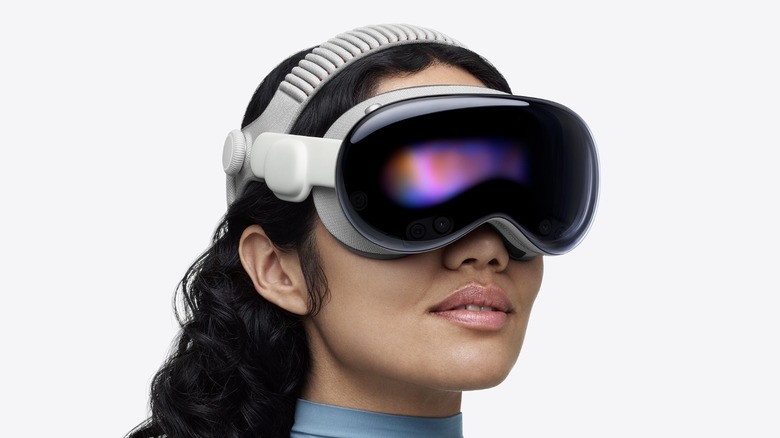
The success of this first virtual reality surgery has led to a rapid expansion of the practice. Dr. Rosenberg has since completed hundreds of procedures, demonstrating that the technology is robust enough for daily clinical use. The ability to maintain sterile field compliance is a significant advantage here. Because the device is controlled through eye tracking and hand gestures, there is no need to touch non-sterile mice or keyboards. This hands-free interaction minimizes the risk of infection and streamlines the surgical workflow, allowing the team to focus entirely on patient outcomes.
Technical Precision: Why Latency Matters
In the world of augmented reality surgery, every millisecond counts. When a surgeon moves a scalpel or a laser, the digital overlay must move in perfect synchronization. Any delay, known as latency, can lead to visual lag, which is not just disorienting—it is potentially dangerous. The Apple Vision Pro addresses this through a sophisticated hardware stack that achieves a latency of approximately 12 milliseconds. To put that in perspective, the blink of an eye takes about 100 to 400 milliseconds.
This latency reduction is made possible by the custom silicon architecture. The M5-series chip, alongside dedicated sensor processing units, handles vast amounts of data from the device’s internal and external cameras. The use of micro-OLED technology ensures that the resolution is high enough to distinguish between microscopic layers of tissue, which is vital for delicate operations like cataract removal or retinal repair. For surgeons, these low latency headsets for virtual surgery provide a level of confidence that was previously impossible with older generations of hardware.
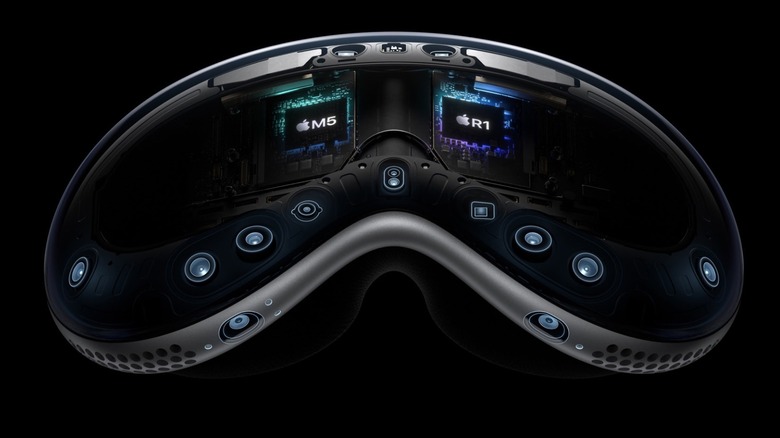
Beyond just speed, the device provides a sophisticated medical imaging overlay. Surgeons can view real-time diagnostics, such as optical coherence tomography (OCT) scans, without leaving the surgical field. This constant stream of data allows for immediate adjustments during the procedure. The high refresh rate of 120Hz further smooths the experience, ensuring that the spatial computing environment remains stable and flicker-free, reducing eye strain for the surgeon during long, complex operations.
Future of Medical Training and Telementoring
The impact of this technology extends far beyond the operating room itself. One of the most significant shifts is happening in virtual reality surgery training. For decades, residents learned by observing and then performing under heavy supervision. Today, platforms like Osso VR allow trainees to practice complex procedures in a risk-free, immersive environment before they ever touch a real patient. These simulations enhance spatial understanding and hand-eye coordination by allowing residents to interact with highly detailed 3D patient models.
This evolution in education is also facilitating collaborative surgery via mixed reality. Through a process known as surgical telementoring, a world-class specialist in London can "step into" an operating room in a rural hospital via the headset. The remote specialist can see exactly what the local surgeon sees and place digital markers or annotations in the local surgeon's field of vision. This democratization of expertise ensures that patients can receive specialist-level care regardless of their geographic location.
- Risk Reduction: Trainees using virtual reality in surgery training show a significant improvement in technique and a reduction in procedural errors.
- Faster Innovation: In pharmaceutical and medical R&D, spatial computing has been shown to speed up molecular modeling and drug discovery by up to 30%.
- Immersive Learning: The apple vision pro medical applications guide highlights how students can visualize human anatomy in three dimensions, moving around organs and systems to understand complex relationships.
Institutional Scaling: From Specialized Clinics to the VHA
While the first virtual reality surgery took place in a specialized eye clinic, the technology is rapidly moving into large-scale healthcare systems. The Veterans Health Administration (VHA) has been a leader in this space, implementing XR technology across more than 170 facilities. This move signals that medical XR has progressed from a niche experimental tool to a core component of modern healthcare infrastructure, moving from Technology Readiness Level (TRL) 6 to TRL 9.
In Europe, programs like the SCALE-UP4REHAB initiative are using similar technologies to improve patient rehabilitation. The goal is to create smart surgical suites where every piece of equipment is connected via a low-latency network. In these environments, digital patient mapping becomes the blueprint for every operation. By integrating virtual reality in healthcare, institutions can lower costs over time by reducing the length of hospital stays and decreasing the rate of surgical complications.
The transition toward these digital ecosystems is also supported by the ability to perform real-time diagnostics and telepresence. As hospitals upgrade their infrastructure to support 5G and high-speed local networks, the Apple Vision Pro and similar devices will become as common as the stethoscope once was. We are moving toward a future where "blind" surgery is a thing of the past, replaced by a data-rich environment that empowers surgeons to perform at their absolute best.
FAQ
What is virtual reality surgery?
Virtual reality surgery refers to the use of immersive computer-generated environments or digital overlays to assist in medical procedures. This includes both the actual performance of operations using headsets like the Apple Vision Pro to see 3D data and microscope feeds, as well as the use of simulators for surgical training. It enhances precision by providing a heads-up display of patient information and diagnostic imagery directly in the surgeon's field of view.
Is a vitrectomy a serious operation?
Yes, a vitrectomy is considered a serious surgical procedure performed by an ophthalmologist to treat various problems with the eye's retina and vitreous. It involves the removal of the vitreous gel from the eye and is typically used to treat conditions like retinal detachment, diabetic retinopathy, or macular holes. While common, it requires high precision and a significant recovery period, which is why technologies like spatial computing are being explored to improve surgical accuracy during such delicate tasks.
What is the #1 most painful surgery?
While pain is subjective, many medical professionals and patients cite open abdominal surgery, thoracic surgery, and certain orthopedic procedures like total knee replacement as some of the most painful during recovery. In the context of eye surgery, while the procedures themselves are often performed under anesthesia, the post-operative recovery for extensive retinal work can involve significant discomfort. Advances in minimally invasive virtual reality surgery aim to reduce tissue trauma, which can help manage overall patient pain levels.
Does insurance cover VR Therapy?
Insurance coverage for virtual reality in healthcare is evolving. Many major insurers have begun to cover VR-based treatments for specific conditions, such as chronic pain management, physical rehabilitation, and certain behavioral health treatments like PTSD therapy. However, the use of VR as an intraoperative tool is generally covered as part of the overall surgical cost rather than a separate line item. Patients should check with their specific provider and hospital to see if XR-assisted procedures are included in their plan's coverage for specialized surgery.
The integration of spatial computing into the medical field is no longer a futuristic concept—it is a present-day reality. From Dr. Rosenberg’s pioneering work in New York to the nationwide scaling of XR in the VHA, the Apple Vision Pro is proving that consumer hardware, when paired with specialized software, can save lives. As we continue to refine these tools, the focus will remain on enhancing the human element of medicine through the power of digital precision.