Imagine a Saturday morning where the only thing you’re "mowing" is a fresh cup of coffee. Outside, your lawn is being groomed to golf-course perfection by a machine that’s quieter than a dishwasher and smarter than your first laptop. This was the dominant vision at CES 2026, where the "luxury gadget" era of robotic mowers officially transitioned into the "essential utility" era.
But let’s talk numbers. With entry-level pricing for advanced autonomous mowers starting at $1,000 and flagship professional-grade models reaching up to $4,999, the question isn't just "Does it work?" but "Is it worth the investment?" For homeowners with sprawling estates up to 15 acres, steep 75% inclines, or yards that look more like obstacle courses than rectangles, the answer is a resounding yes. The latest innovations have finally eliminated the biggest headache of the past decade: the dreaded boundary wire.
Quick Comparison: CES 2026 Top Tier Models
| Model | Max Yard Size | Max Slope | Navigation Tech | Est. Price |
|---|---|---|---|---|
| Lymow One | Up to 15 Acres | 45% (24°) | LiDAR + VSLAM | $3,499 |
| Mowrator S1 4WD | 1.5 Acres | 75% (37°) | AWD + Remote Control | $2,799 |
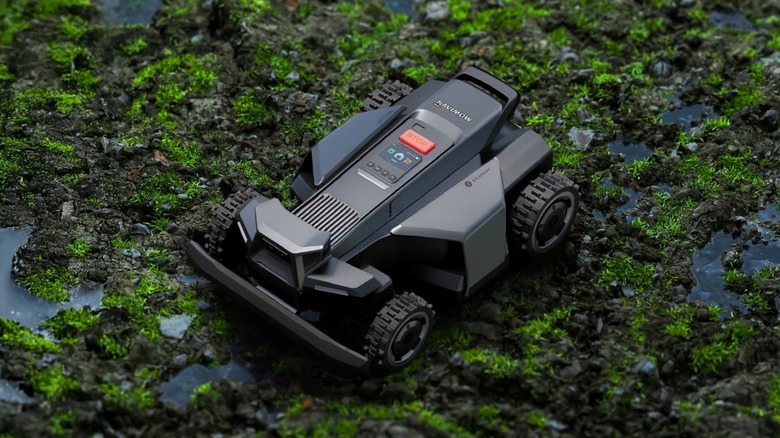
| Segway Navimow X4 | 1.5+ Acres | 50% (26°) | EFLS 3.0 (RTK + Vision) | $2,999 |
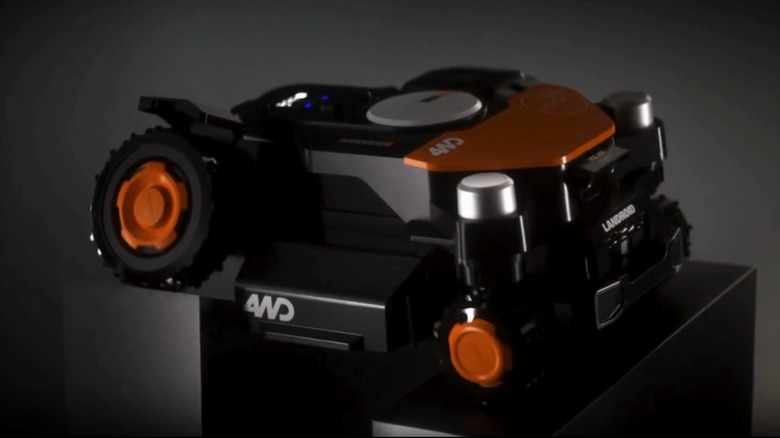
| Worx Landroid Vision | 0.5 Acres | 35% (19°) | AI Vision (No RTK) | $1,299 |
| Ecovacs Goat A3000 | 1.0 Acre | 40% (22°) | Dual LiDAR + 3D Vision | $2,499 |
The Tech That Justifies the $1,000+ Price Tag
If you’re used to the $500 "dumb" mowers of five years ago, the jump to $1,000+ might feel like sticker shock. However, the price hike is driven by a massive leap in sensor density. We are no longer seeing mowers that "bump and turn." The 2026 lineup is essentially a fleet of low-speed, blade-wielding Teslas for your backyard.
The most significant shift is the death of the boundary wire. Setting up an old-school robot mower involved burying hundreds of feet of copper wire—a back-breaking process prone to accidental breaks. The new generation utilizes LiDAR (Light Detection and Ranging) and RTK (Real-Time Kinematic) Satellite navigation. These systems allow the mower to know its position within 1-2 centimeters.
Furthermore, slope performance has been the final frontier for robotic lawn care. While early models would lose traction on a 15-degree incline, CES 2026 showcased All-Wheel Drive (AWD) and industrial-grade treads. Models like the Mowrator S1 can now handle 75% inclines (roughly 37 degrees), which is steeper than most people can safely walk with a push mower.
Tech Term Glossary
- RTK (Real-Time Kinematic): Uses satellite signals and a local base station to give the mower centimeter-level accuracy without wires.
- LiDAR: Uses laser pulses to "see" the world in 3D. Excellent for night mowing and avoiding small obstacles like toys or hedgehogs.
- VSLAM: Vision-based mapping that uses cameras to recognize landmarks, helping the mower navigate even when GPS signals are blocked by trees or tall buildings.
Top CES 2026 Picks by Category
1. Best for Large Estates: Lymow One & Segway Navimow X4
If you own a property that usually requires a tractor, the Lymow One is the standout of the year. While most consumer robots tap out at one or two acres, the Lymow One utilizes a unique caterpillar track system and dual cutting motors to handle up to 15 acres. It’s built with industrial-grade tool-steel blades that don't just "clip" grass—they pulverize it.
The Segway Navimow X4 targets the "prosumer" with a 1.5-acre capacity. Its standout feature is the EFLS 3.0 system, which merges RTK satellite data with vision-based AI. If the mower goes under a thick oak tree and loses GPS, the camera takes over instantly to ensure it doesn't wander into your flower beds.
Lymow One & Segway X4 Series:
- Pros: Massive coverage capacity; industrial-strength cutting blades; superior mud/rough terrain handling.
- Cons: High initial investment; requires a large, clear area for the RTK antenna setup.
2. Best for Steep Hills: Mowrator S1 4WD
For those with "cliffside" yards, the Mowrator S1 4WD is the undisputed king. Most robotic mowers are designed for suburban flatlands, but the Mowrator is a beast of a machine. With a 75% incline climbing ability (about 37 degrees), it can traverse terrain that would be dangerous for a human to mow.
What sets it apart is the "remote control" override. If you have a particularly gnarly patch of brush or a hazardous drop-off, you can take manual control via a smartphone app, steering it like an RC car. Its 21-inch cutting deck is also significantly wider than the 7-9 inch decks found on standard robots, meaning it finishes the job in a fraction of the time.
Mowrator S1 4WD:
- Pros: Best-in-class slope capability; wide cutting deck for faster completion; rugged AWD chassis.
- Cons: Louder than vision-based models; overkill for small, flat yards.
3. Best for Complex/Shady Yards: Ecovacs Goat A3000 & Eufy E18
The biggest enemy of a satellite-guided mower is a "canyon" of trees or a house with deep eaves. This is where the Ecovacs Goat A3000 shines. Instead of relying solely on satellites, it uses 3D dual-LiDAR sensors and "Pure Vision" FSD (Full Self-Driving) technology.
The Goat A3000 can identify and avoid over 100 common yard obstacles, including garden hoses, sleeping pets, and even scattered LEGOs. The setup is remarkably simple: you don't even need to walk the perimeter. You simply "drive" it once via the app, and its AI creates a 3D map of the entire environment.
Ecovacs & Eufy Models:
- Pros: Best obstacle avoidance in the industry; works in yards with heavy tree cover; very quiet operation.
- Cons: Navigation can struggle in total darkness if the camera sensors are the primary guide.
4. Best Value Over $1,000: Worx Landroid Vision Cloud
For the homeowner with a standard 0.25 to 0.5-acre lot who wants a "set it and forget it" experience, the Worx Landroid Vision Cloud is the most balanced pick. Priced between $1,200 and $1,600, it avoids the complexity of RTK antennas by using a high-resolution camera and a powerful AI chip to distinguish grass from everything else.
The Landroid Vision doesn't need a map of your yard to start; it literally "sees" the grass and knows to stay on it. This makes it the easiest "out-of-the-box" experience for non-techy users.
Worx Landroid Vision Cloud:
- Pros: Most accessible price point for high-end AI; no antenna installation required; sleek, modern design.
- Cons: Not suitable for very large estates; slower navigation speed compared to LiDAR-based models.
Buying Guide: How to Choose Your $1,000+ Mower
When you're spending four figures on a lawn tool, you need to match the tech to your specific dirt. Here is the Alex Morgan-approved checklist:
1. Analyze Your "Sky View"
If your yard is wide open, RTK (Satellite) is the way to go. It’s the most precise and usually allows for the fastest mowing speeds. However, if your yard is a forest of old-growth oaks or has narrow alleys between tall buildings, look for Vision or LiDAR-based systems. These mowers don't need a clear view of the sky to know where they are.
2. Respect the Incline
Do not trust a mower’s "average" performance if you have a steep hill. Look specifically for AWD (All-Wheel Drive) or tank treads. Front-wheel drive robots will simply spin their wheels and burn out your grass when trying to climb in wet conditions. If your slope is over 35%, the Mowrator or Segway X series are your only real contenders.
3. Security and Maintenance
A $3,000 mower sitting in your front yard is a tempting target. Ensure your chosen model includes GPS Geofencing (which alerts your phone if the mower leaves your property) and a PIN-code lock. On the maintenance side, check the cost of replacement blades. Most modern robots use small, razor-like blades that need to be swapped every 2-3 months to maintain a "clean" cut that doesn't brown the tips of the grass.
The Reality of Ownership: Is the Splurge Justified?
To decide if a $1,000+ mower is worth it, we have to look at the Return on Investment (ROI).
A professional lawn service for a 1-acre property typically costs between $60 and $100 per mow. In a standard 30-week growing season, that’s $1,800 to $3,000 per year. A high-end robot like the Segway Navimow X4 pays for itself in less than two seasons. Even if you mow yourself, the "time cost" is significant. If you spend 3 hours a week mowing, edging, and cleaning up, that’s 90 hours a year—over two full work weeks—given back to you.
Beyond the money, there is the "Health of the Grass" factor. Traditional mowers cut off a large portion of the grass blade once a week, which stresses the plant. Robot mowers are "micro-mowers." They go out daily and cut only millimeters at a time. These tiny clippings fall back into the soil as natural fertilizer, leading to a much greener, denser lawn without the need for heavy chemical treatments.
FAQ
What is the steepest incline a robot mower can handle in 2026?
The current leader is the Mowrator S1 4WD, which can handle a 75% incline (approximately 37 degrees). Most standard high-end models (Segway, Lymow) handle between 40% and 50%.
Do all robot mowers in 2026 require boundary wires?
No. The $1,000+ category has almost entirely moved to "wire-free" technology using RTK satellites, LiDAR, or AI Vision cameras. Boundary wires are now mostly found on budget models under $800.
How long do the batteries and blades typically last?
Lithium-ion batteries in these units usually last 3 to 5 years before needing a replacement. The cutting blades are inexpensive and should be replaced every 8-12 weeks to ensure a sharp, healthy cut for your lawn.
Final Verdict
The "luxury" of the 2026 robot mower isn't just about showing off a cool gadget to your neighbors—it’s about reclaiming your weekends and achieving a level of lawn health that manual mowing can’t match.
If you have a small, flat, fenced-in backyard, a $1,000+ model might be overkill. But for anyone battling hills, navigating complex landscaping, or managing more than half an acre, the 2026 generation of wire-free, AI-driven mowers is the smartest investment you can make for your home this year. The era of the "lawn slave" is over; the era of the "lawn manager" has begun.