The 1970s did not merely represent an era of cultural shift; for the automotive world, it was the final, thunderous roar of the internal combustion engine’s golden age before the sobering reality of the 1973 oil crisis and tightening emissions regulations took hold. While some remember the decade for the decline of the muscle car, savvy collectors see it as the birthplace of the most refined, rarest, and most valuable machines ever to hit the tarmac.
As we look toward the 2026 auction season, the market for 1970s classic cars is entering a "bull cycle" unlike any we’ve seen. Investors are no longer just looking for nostalgia; they are hunting for "blue-chip" assets that offer mechanical purity and historical weight. Currently, the 1972/73 Ferrari 365 GTS/4 Daytona Spider leads the pack as a seven-figure titan, with average resale prices commanding approximately $1.9 million. Simultaneously, the 1973 Porsche 911 Carrera RS 2.7 has transcended its status as a mere sports car to become a premier investment vehicle, with rare 'Sport' variants recently peaking at $1.875 million.
For those looking to anchor their portfolio in American iron, the 1970 Chevrolet Chevelle SS 454 (LS6) remains the undisputed king of muscle, with convertible models averaging $234,000. Whether it is the engineering resilience of European icons or the raw displacement of Detroit’s finest, the following five vehicles represent the absolute pinnacle of 1970s classic car resale value.
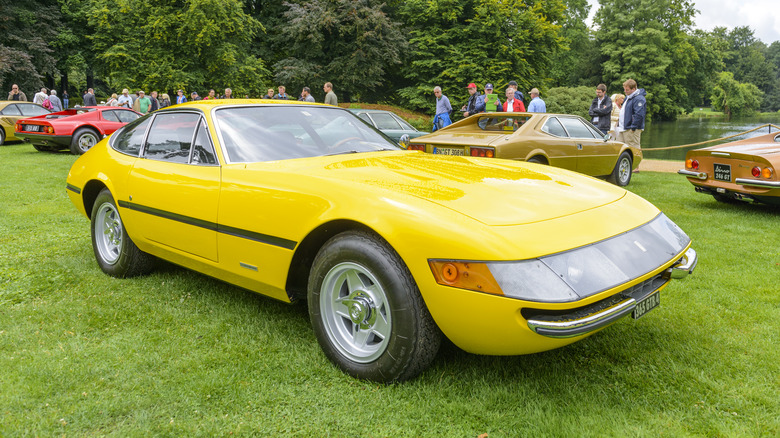
1. 1972/73 Ferrari 365 GTS/4 Daytona Spider: The Seven-Figure Champion
The Ferrari 365 GTB/4, affectionately known as the "Daytona" in honor of Ferrari's 1-2-3 finish at the 1967 24 Hours of Daytona, is the quintessential front-engine V12 grand tourer. While the coupe is a masterpiece in its own right, the "Spider" (the GTS/4) is the variant that makes collectors' pulses race and bank accounts tremble. Powered by the legendary 4.4L Colombo V12, producing a staggering 362 horsepower, it was the fastest production car in the world upon its release.
The investment logic here is driven by extreme scarcity. While over 1,200 coupes were produced, only 122 genuine Spiders ever left the Maranello factory. This rarity has created a massive valuation gap. Currently, the 1973 Ferrari 365 GTS/4 Daytona Spider maintains a 268% value premium over its coupe counterpart. In a market where open-top V12 Ferraris are considered the "holy grail," this car has solidified its place as the top-performing 1970s investment.
As we move into 2026, the demand for "preservation class" Daytonas—those with original paint, interior, and matching numbers—is expected to drive prices even higher. This isn't just a car; it is a piece of kinetic sculpture that represents the end of an era before Ferrari moved toward mid-engine layouts like the Berlinetta Boxer.
Pro Investment Tip: When scouting a Daytona Spider, verification is everything. Due to the high value of the GTS/4, many coupes were "cut" to resemble Spiders in the 80s and 90s. Always insist on a Ferrari Classiche certification to ensure the chassis is an original open-top model.
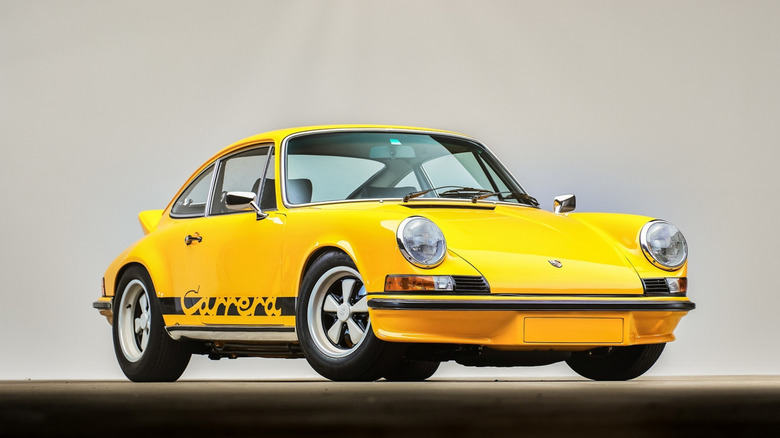
2. 1973 Porsche 911 Carrera RS 2.7: The Ultimate Driver's Investment
If there is one car that defines the bridge between a road-going vehicle and a race-bred machine, it is the 1973 Porsche 911 Carrera RS 2.7. Developed as a homologation special to allow Porsche to compete in Group 4 racing, the RS (Rennsport) was lighter, more powerful, and featured the now-iconic "ducktail" rear spoiler—the first of its kind on a production Porsche.
The resale market for the RS 2.7 has been on a vertical trajectory for the last decade. While the "Touring" versions are highly coveted, averaging around $445,000, it is the ultra-rare "Sport" (or Lightweight) variant that has seen peak auction prices reach $1.875 million. With only 1,580 units total across all variants, the supply is dwarfed by the global demand from Gen X and Millennial collectors who view this as the "definitive" 911.
What makes the Carrera RS such a stable investment for 2026 is its dual identity. It is civilized enough for a weekend rally but possesses a mechanical directness that modern Porsches simply cannot replicate. As the automotive world moves toward electrification, the demand for this analog masterpiece—with its 210 hp flat-six and visceral feedback—shows no signs of cooling.
3. 1970 Chevrolet Chevelle SS 454 (LS6): The King of American Muscle
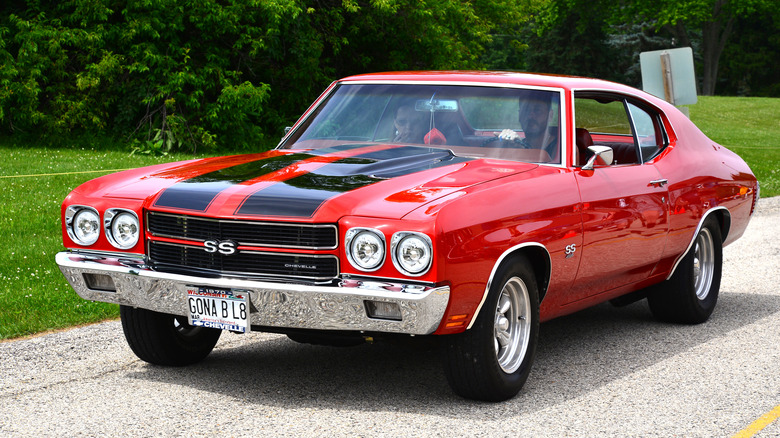
In the hierarchy of American muscle, the 1970 Chevelle SS 454 equipped with the LS6 engine package sits at the absolute summit. This was the year GM finally lifted its internal ban on engines larger than 400 cubic inches in mid-sized cars, resulting in a 454 cubic-inch V8 that was conservatively rated at 450 horsepower and 500 lb-ft of torque. In reality, these numbers were often higher, making the LS6 a "street-legal dragster" right off the showroom floor.
From an investment perspective, the Chevelle LS6 is the "blue-chip" stock of the muscle car world. While hardtops are highly sought after, frequently exceeding $150,000, it is the convertible models that command the highest premiums. Current market data shows that 1970 Chevelle SS 454 LS6 convertible models average $234,000, with pristine, documented examples pushing even further.
The value of the LS6 is anchored in its status as the high-water mark of the muscle car era. By 1971, compression ratios dropped and the "performance wars" effectively ended. For collectors, owning an LS6 isn't just about speed; it's about owning the most powerful production car of the original muscle era.
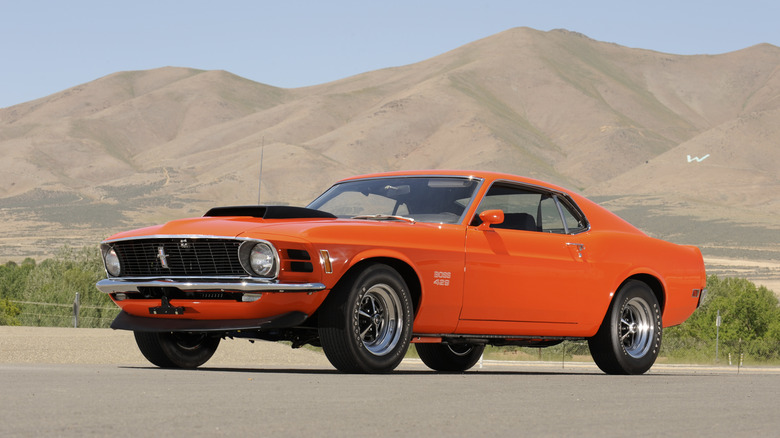
4. 1970 Ford Mustang Boss 429: The NASCAR Legend
Ford’s answer to the horsepower wars was not born out of a desire for street dominance, but rather the need for track supremacy. To homologate the massive 429 cubic-inch semi-hemispherical engine for NASCAR use, Ford had to install the powerplant in at least 500 production vehicles. The Mustang was the chosen vessel, and thus the Boss 429 was born.
Because the engine was so large, Ford had to outsource the assembly to Kar Kraft, who modified the Mustang’s shock towers and widened the stance just to make the engine fit. Only 499 units were built for the 1970 model year, making it one of the rarest Mustangs in existence.
The investment performance of the Boss 429 has been remarkable. Despite a standard valuation hovering around $190,000 for years, the car achieved a 32.6% price surge at the 2025 Monterey Car Week, with a top-tier example selling for $252,000. This jump signals a renewed interest in rare "homologation specials" as collectors look for cars with a direct link to racing history.
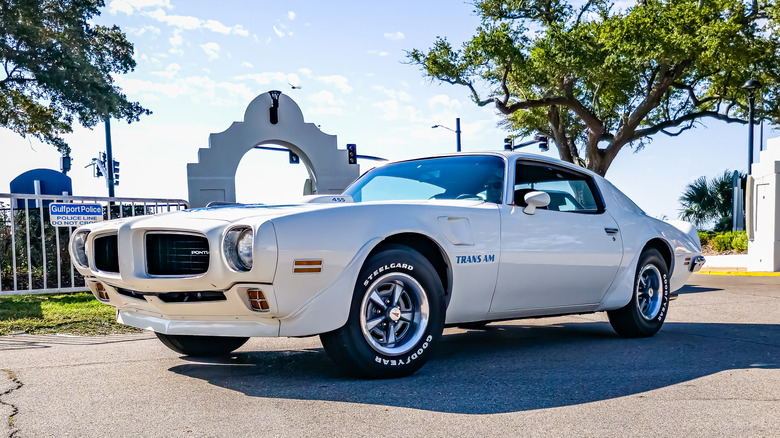
5. 1973 Pontiac Firebird Trans Am Super Duty 455: The Last of the Golden Age
While most manufacturers were detuning their engines in 1973 to meet new emissions standards, Pontiac went in the opposite direction. They released the Super Duty 455 (SD-455), a factory-built "race engine for the street." It featured a reinforced block, special cylinder heads, and a forged rotating assembly. While its rated output of 290 hp seemed low, it was vastly understated for insurance purposes—in reality, the SD-455 was a monster that could embarrass cars from the "glory years" of 1969 and 1970.
The SD-455 is the definition of a "survivor." Only 252 Trans Ams were equipped with this engine in 1973, making it an incredibly scarce find. High-spec models are now fetching up to $260,000 at auction. It appeals to a specific type of investor: one who appreciates the defiance of Pontiac engineers who refused to let the performance era die without one final, screaming stand.
1970s Performance & Valuation Comparison
To better understand how these icons stack up against each other, here is a breakdown of their technical specifications against their projected 2026 auction performance.
| Model | Engine Type | Displacement | Horsepower | Est. 2026 Value (Concours) |
|---|---|---|---|---|
| Ferrari 365 GTS/4 | Colombo V12 | 4.4L | 362 hp | $1,900,000+ |
| Porsche 911 RS 2.7 | Flat-6 | 2.7L | 210 hp | $1,875,000 (Sport) |
| Pontiac TA SD-455 | V8 | 7.5L | 290 hp* | $260,000 |
| Ford Mustang Boss 429 | V8 (Semi-Hemi) | 7.0L | 375 hp | $252,000 |
| Chevelle SS 454 (LS6) | V8 | 7.4L | 450 hp | $234,000 (Conv.) |
| *Note: Understated for 1973 insurance/emissions regulations. |
Investor’s Guide: What to Look for in 2026
Investing in 1970s classic cars requires more than just a deep pocket; it requires a discerning eye. As we move into 2026, the criteria for "investment grade" vehicles are becoming stricter.
1. The "Matching Numbers" Mandate
In the 2026 market, a car's value is inextricably linked to its originality. "Matching numbers"—where the engine, transmission, and chassis serial numbers align with factory records—is the difference between a $200,000 car and a $100,000 car. For Ferrari and Porsche, official factory certification (like Porsche’s COA or Ferrari Classiche) is no longer optional; it is a requirement for top-tier resale value.
2. Condition Categories
Investors should focus on "Level 2" (Concours) or high "Level 3" (Drivable Show) conditions. While "Level 1" museum pieces command the highest prices, they are often difficult to maintain and risky to drive. Level 2 cars offer the best balance of appreciation potential and the ability to participate in high-end rallies and shows, which further boosts the car's provenance.
3. The Demographic Shift
We are witnessing a fascinating transition in the collector market. While Baby Boomers are beginning to liquidate some of their C2 Corvettes and early 50s classics, Gen X and older Millennials are entering their peak earning years. These buyers are driving the surge in 1970s values because these were the "poster cars" of their youth. This demographic shift ensures that cars like the Carrera RS and the Trans Am have a long runway for future appreciation.
Conclusion: The Future of the Classic Car Bull Market
The 1970s represent a unique intersection of raw mechanical power and the beginning of modern sports car sophistication. For the investor, these five models offer more than just a place to park capital; they offer a tangible connection to a pivotal moment in history.
Whether it is the $1.9 million Ferrari Daytona Spider representing the pinnacle of Italian elegance or the Ford Mustang Boss 429 standing as a monument to American racing ambition, these vehicles have proven their resilience against market volatility. As we approach 2026, the "Bull Market" for 1970s classics shows no signs of slowing down. For those who prioritize rarity, documentation, and mechanical excellence, the rewards—both financial and experiential—remain sky-high.
FAQ
Q: Why is the Ferrari Daytona Spider so much more expensive than the Coupe?
A: Scarcity is the primary driver. Ferrari only built 122 Spiders compared to over 1,200 coupes. The open-top V12 experience is also considered the ultimate expression of the Ferrari brand, leading to a 268% value premium.
Q: Are 1970s muscle cars still a good investment despite rising fuel prices and EV trends?
A: Absolutely. Classic cars of this caliber are no longer "daily drivers"; they are considered alternative assets, similar to fine art or rare watches. Their value is tied to their historical significance and rarity, not their fuel efficiency.
Q: What is the most important document to have when buying a 1973 Porsche 911 Carrera RS 2.7?
A: You should look for the Porsche Certificate of Authenticity (COA) or the newer Porsche Production Specification (PPS) document. These verify the original engine and transmission numbers, as well as the factory color and options, which are critical for the car's $1M+ valuation.